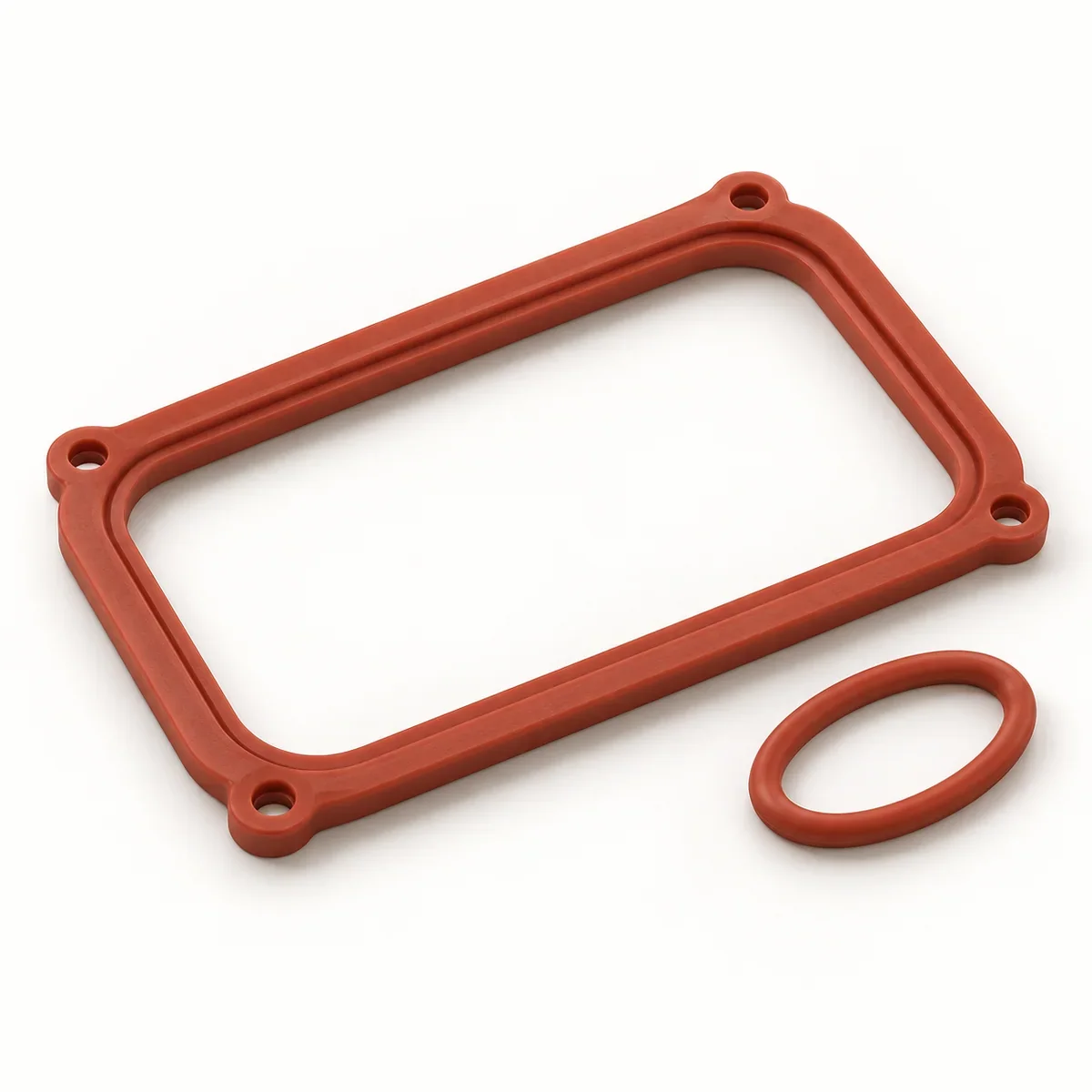
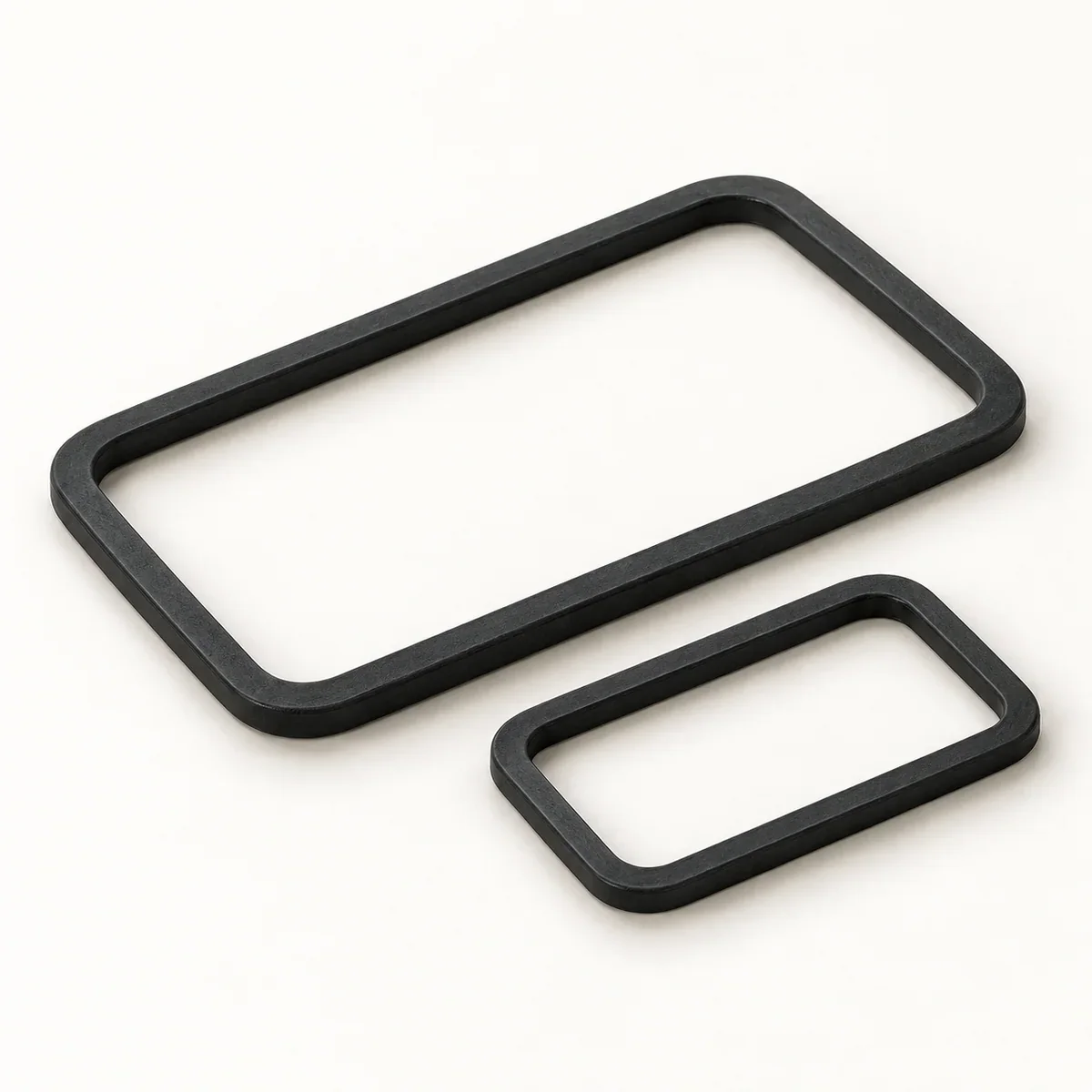
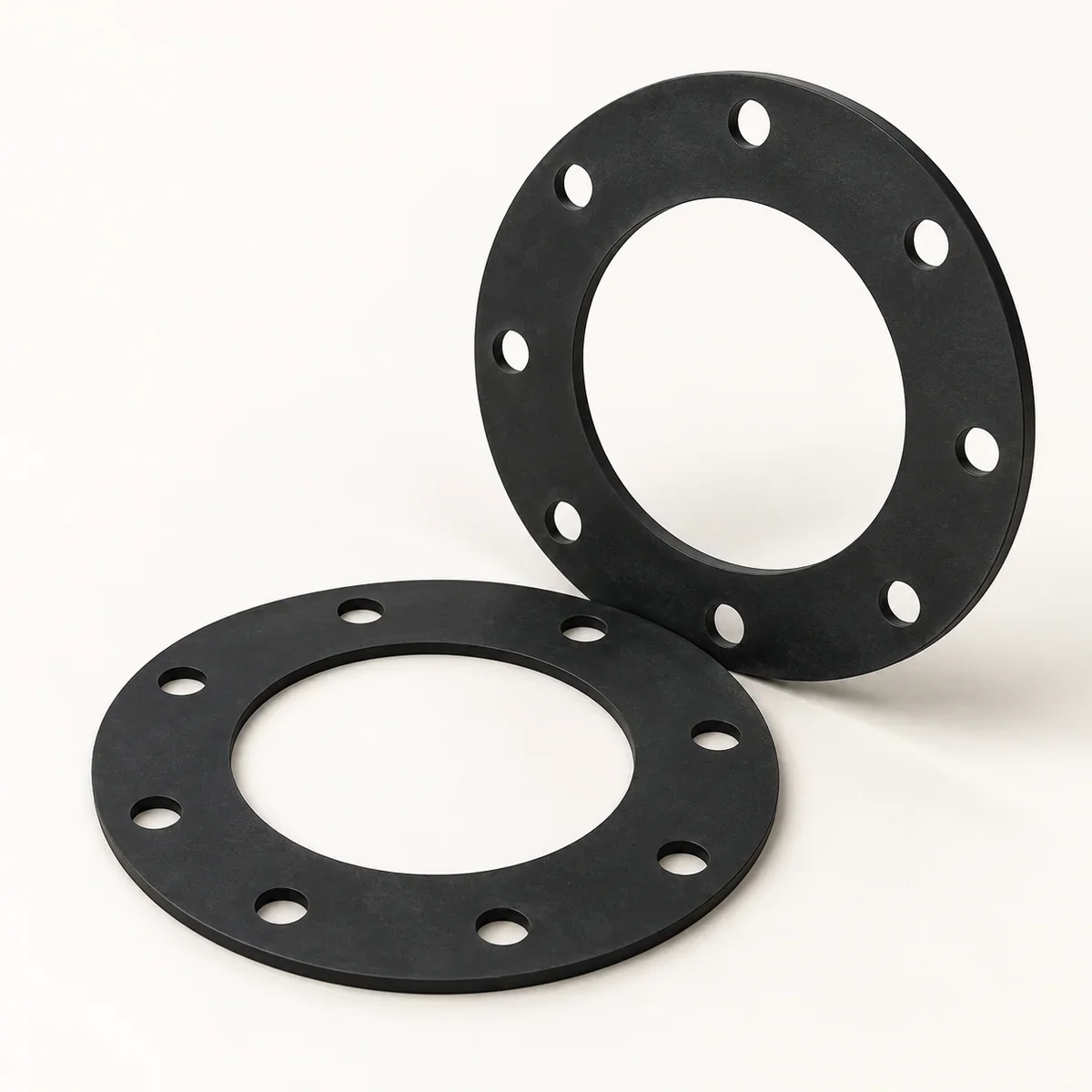
A flat thickness with a functional outline
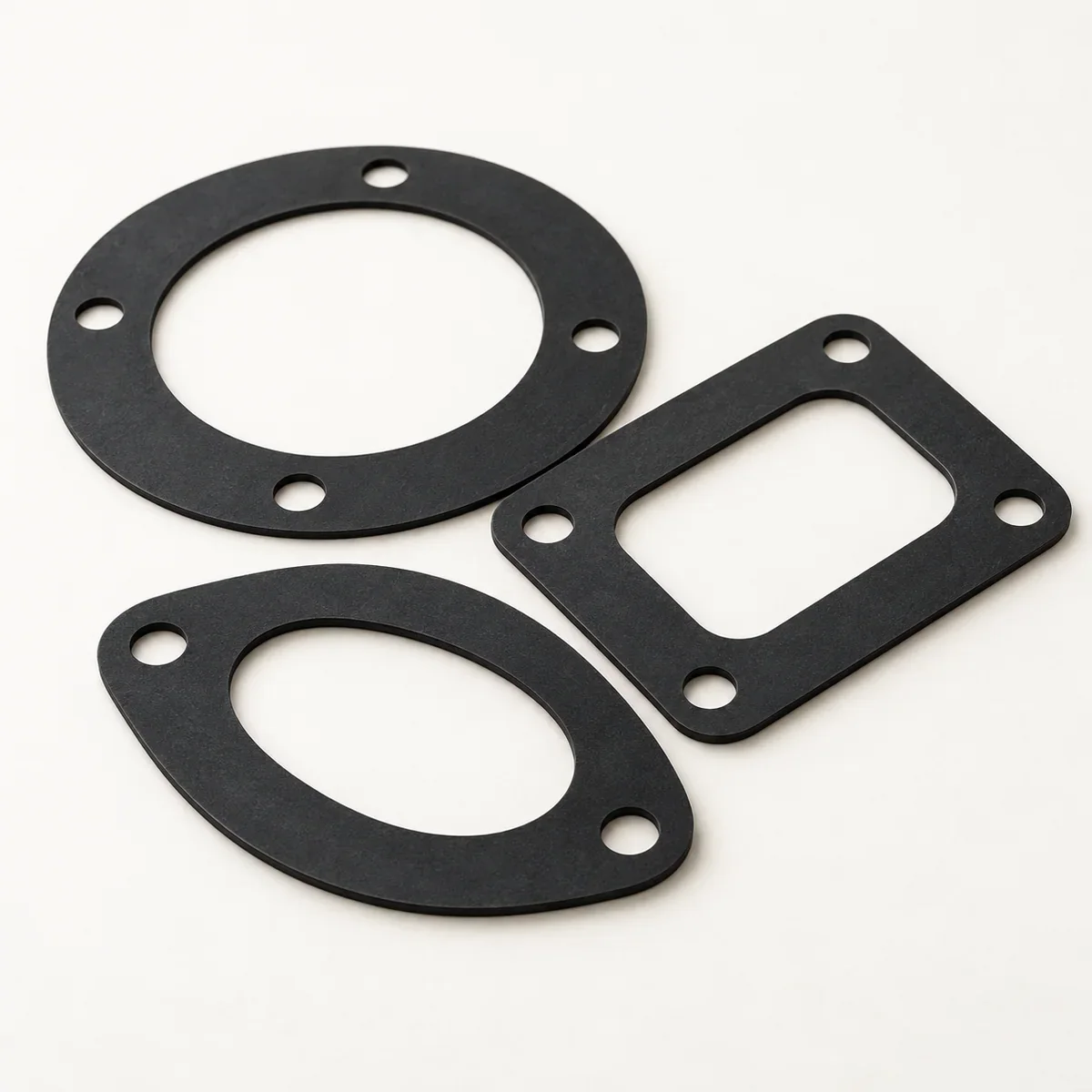
Use this family when the sealing element is described by a two-dimensional profile and nominal thickness. The drawing must identify the sealing land, bolt holes and any openings that need to stay clear after assembly.
- Distinguish the outside edge from the effective sealing area.
- Dimension holes from datums rather than tracing a photograph.
- Mark narrow bridges or tabs that need special handling.
Thickness is an assembly decision
Provide the assembled gap, surface condition and fastening arrangement. A thicker gasket should not be assumed to correct a damaged or misaligned joint. If replacing an old gasket, record its uncompressed thickness where possible and explain whether it has taken a permanent set.
Customization and limits
Material, cut-edge quality, thickness tolerance and supplied flatness need project review. Adhesive backing, if requested, introduces an additional material and should be evaluated for the exposure and removal task.
Prepare your inquiry
- Drawing/CAD revision and matching assembly detail.
- Required thickness and fit-check method.
- Material requirement or exact exposure for screening.
- Quantity and whether parts need individual separation.
Buyer questions
Can I copy a compressed gasket thickness?
Treat the used measurement as evidence of condition, not automatically the original nominal thickness. Include the joint drawing or an unused reference if available.
Is adhesive backing included?
It is a separate requirement to review. Specify whether adhesive contacts the medium and whether clean removal matters.
Related project families
Engineering reading
General references and scope
These references explain general engineering or regulatory context. They are not Xinwei finished-product specifications, test results or compliance evidence.