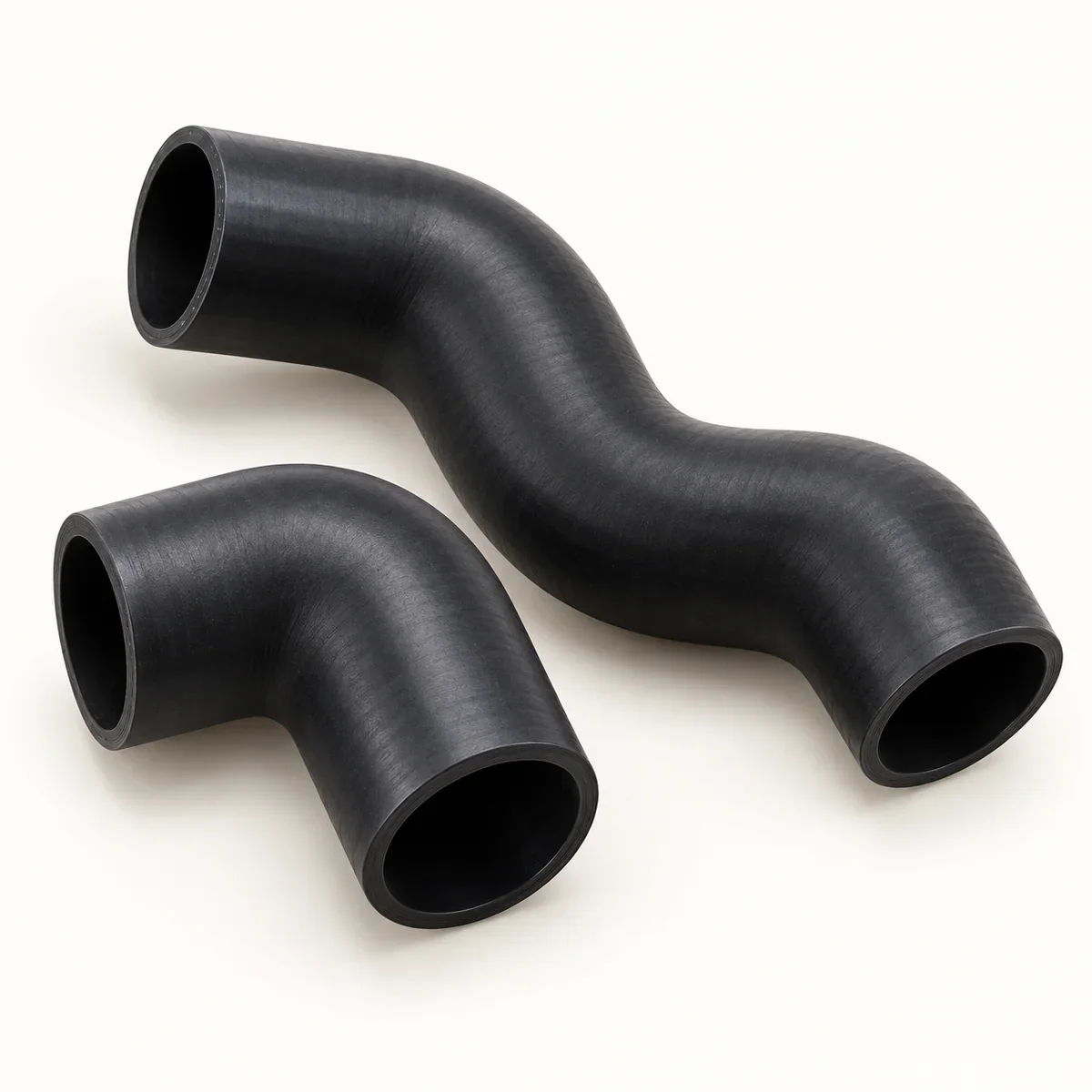
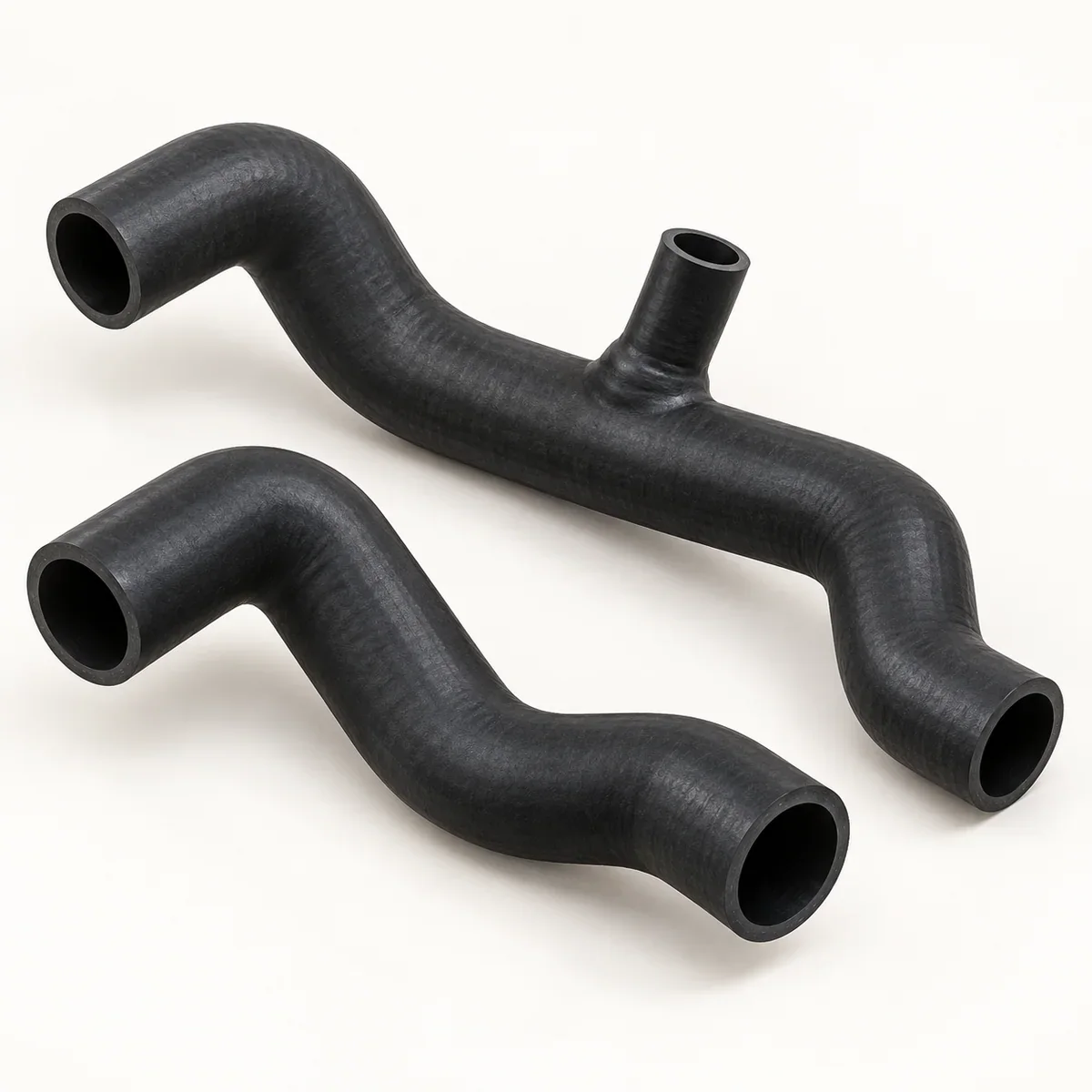
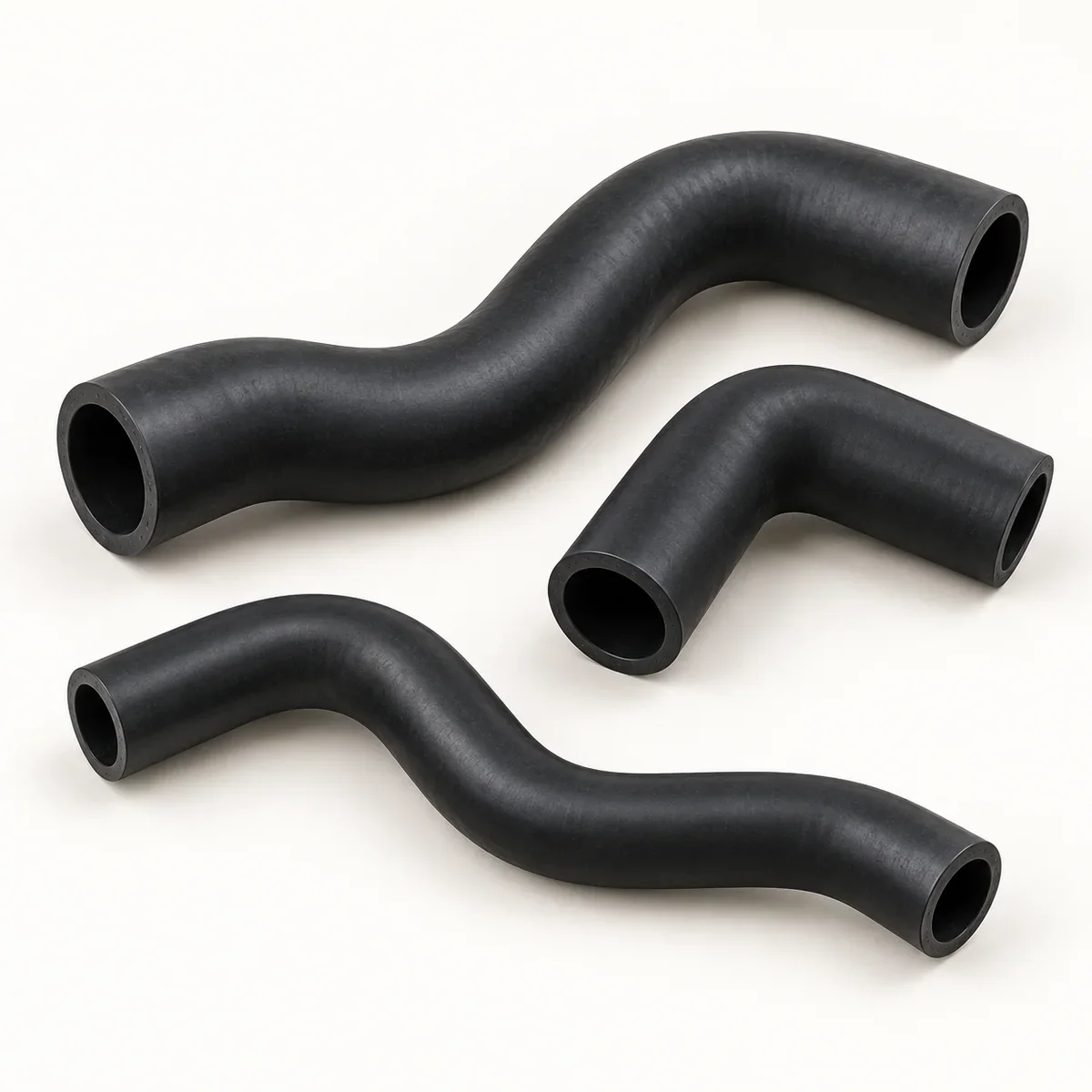
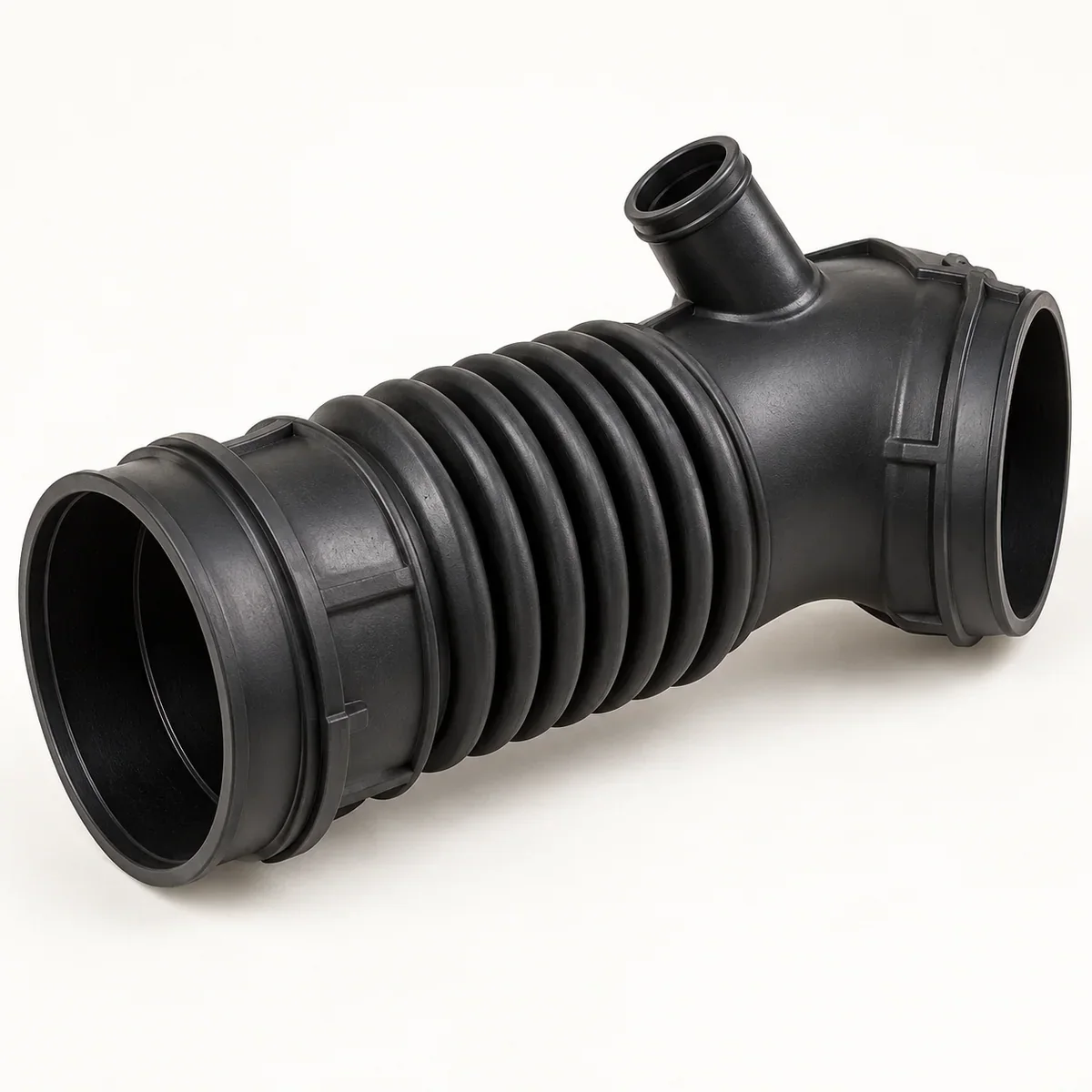
Identify the circuit first
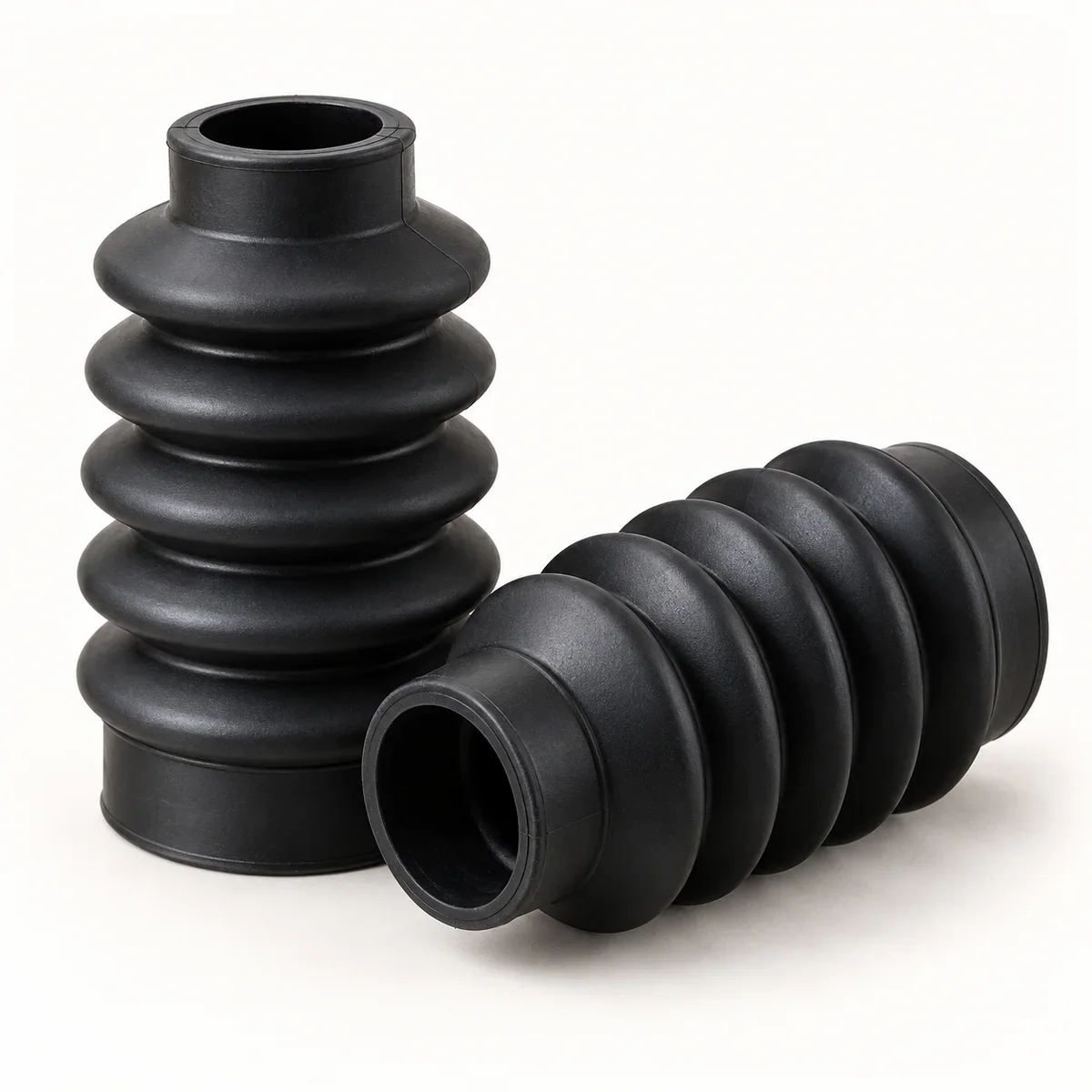
A coolant connection, suction intake and vapor vent can share a similar shape while requiring different construction and validation. Record the connected components and describe what the route actually carries, including oil mist, condensate and cleaning exposure.
Build the installation envelope
Use assembly datums to locate the ends, branches, brackets and clamp zones. Include relative movement between the engine or moving module and fixed equipment. Mark hot surfaces, abrasion risks and the space needed to install fasteners.
- Coolant: fluid formulation, concentration, thermal cycle and pressure/vacuum transients.
- Intake: suction/positive pressure, ports, airflow task and collapse assessment.
- Breather/vent: vapor composition, condensate, oil mist and any specified emissions requirements.
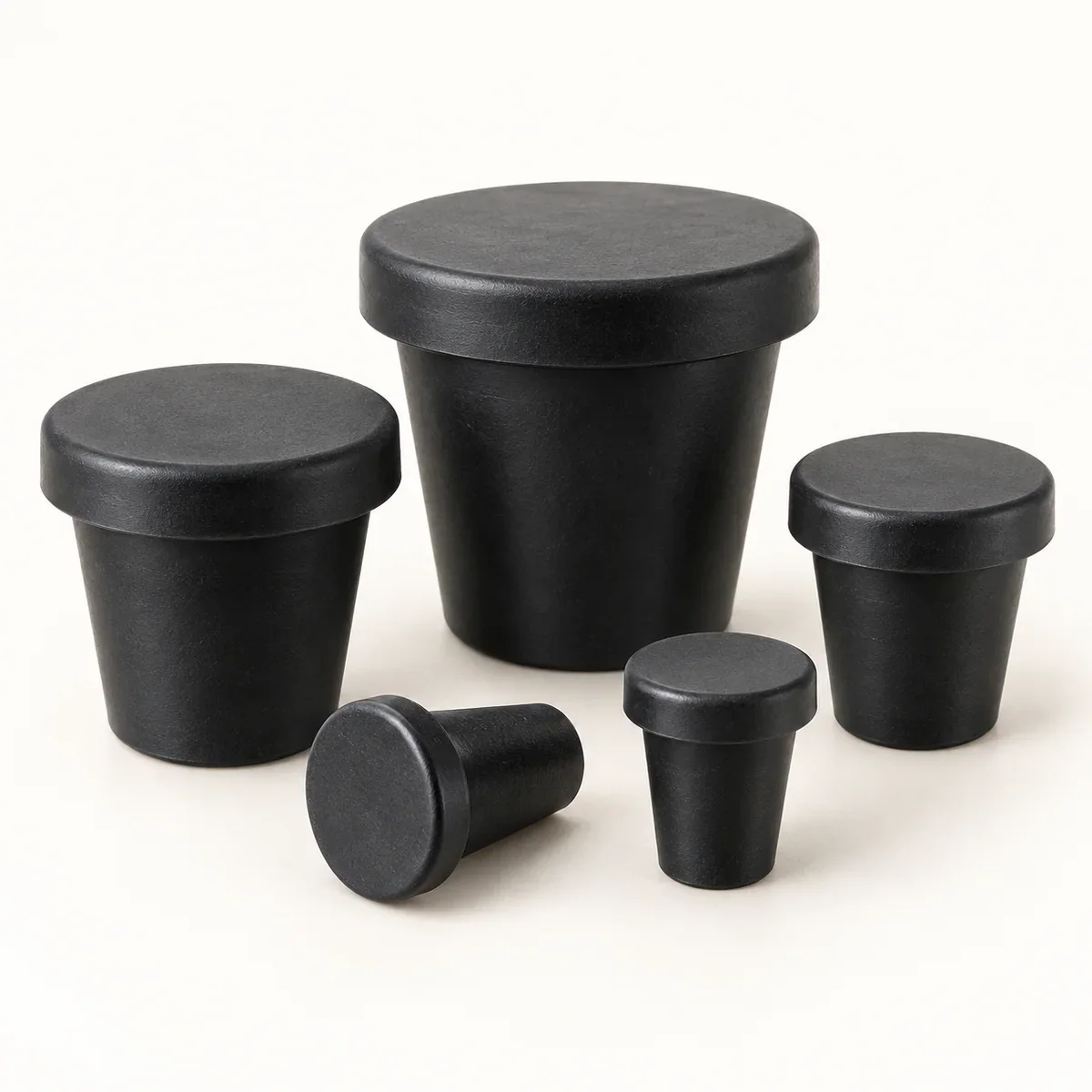
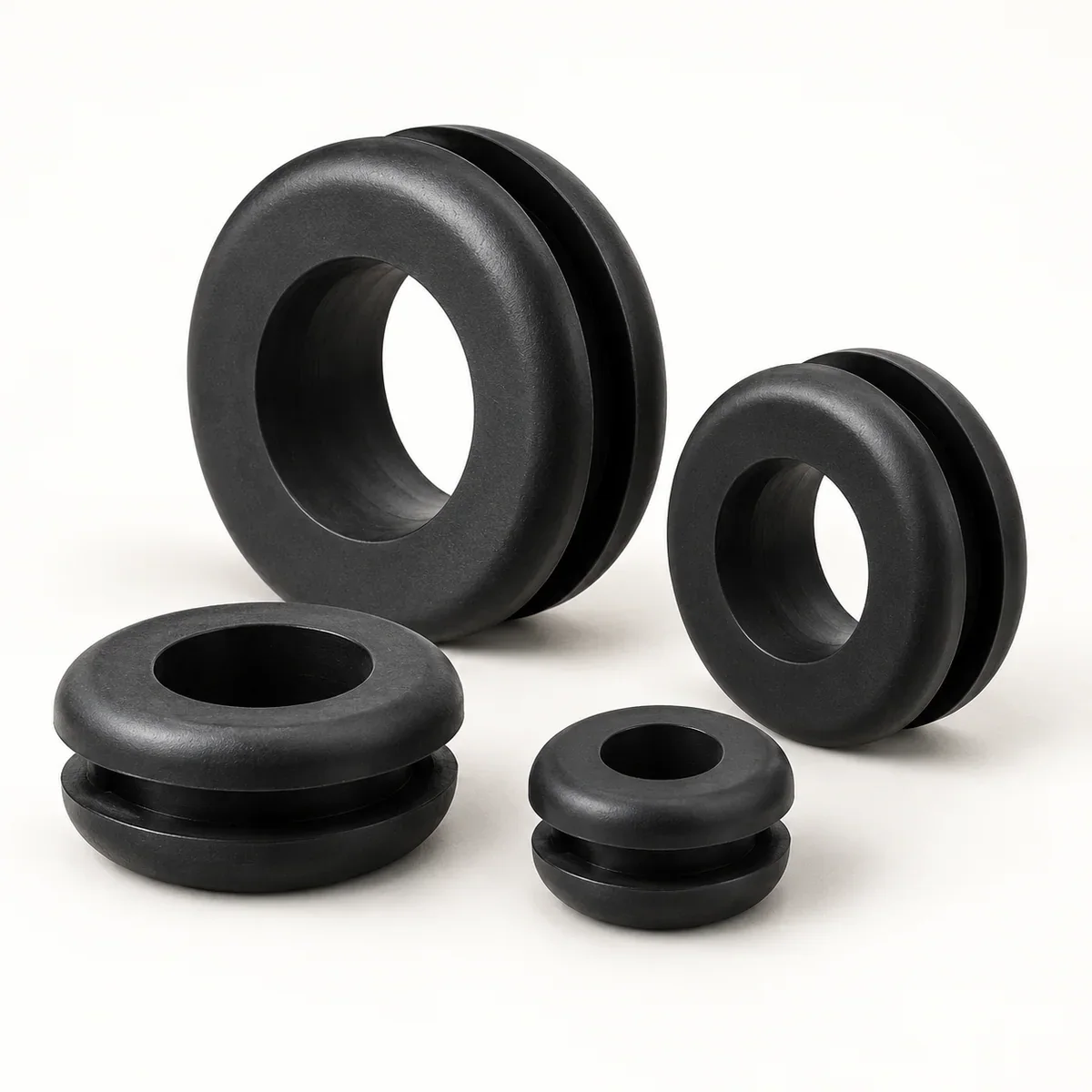
- Protective boots and grommets: panel/end fit, movement and protection requirements.
Define the release evidence
Agree dimensions, fit, leakage and durability conditions for the specific circuit. A custom illustration, factory certificate or material-family label does not establish OEM approval or vehicle compatibility. Customer documentation requirements should be named in the inquiry rather than assumed.
Related project families
Engineering reading
General references and scope
These references explain general engineering or regulatory context. They are not Xinwei finished-product specifications, test results or compliance evidence.
- Wire Inserted Green Stripe Coolant Hose — Illustrates that reinforcement, bend radius, dimensions and application limitations belong to an identified hose construction. No Gates rating, standard compliance or construction is claimed for Xinwei.
- Automotive Materials — English technical body on an official localized URL. General NBR, EPDM, FKM and HNBR selection context; formulation and exposure conditions matter. No supplier-specific numbers are transferred.