01 / Knowledge
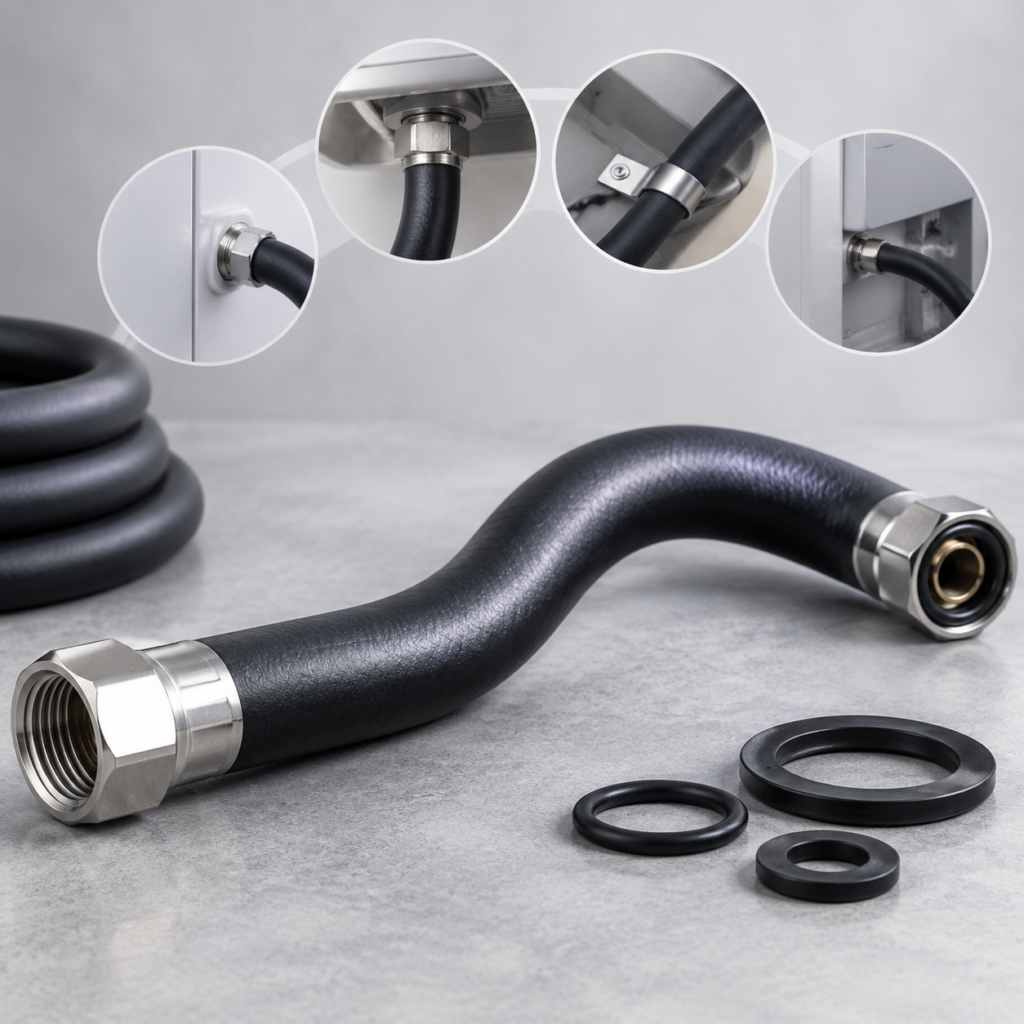
A free-state hose sample or one straight dimension does not fully define an appliance connector. Buyers should document each interface, installed orientation, offset, movement, clamp access, exposure cycle and acceptance criteria before requesting a custom molded hose.
Read guide ↗02 / Knowledge
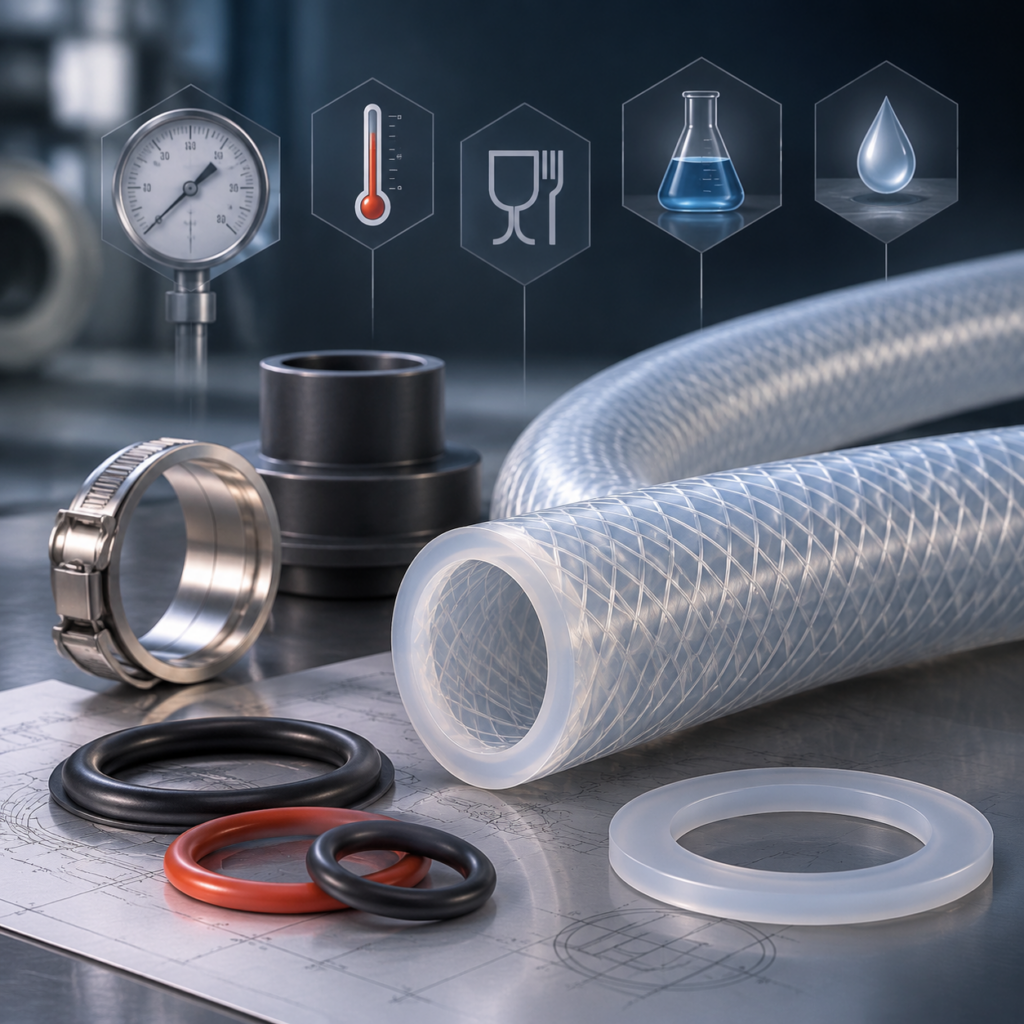
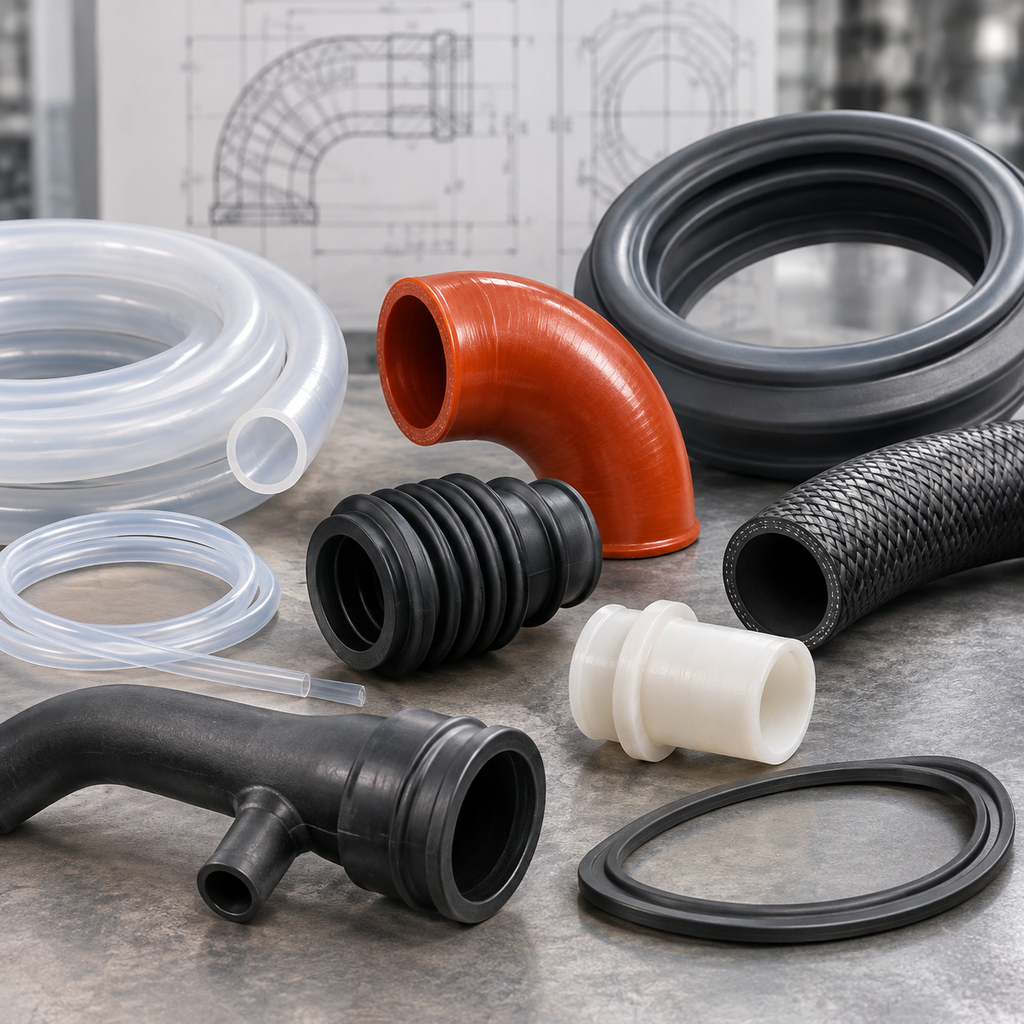
Braiding does not automatically make a silicone hose pressure-rated or suitable for a food-contact transfer route. Buyers should define pressure and vacuum duty, routing, fittings, retention, contact surfaces, cleaning exposure and assembly acceptance tests before reviewing the proposed construction and supporting evidence.
Read guide ↗03 / Knowledge
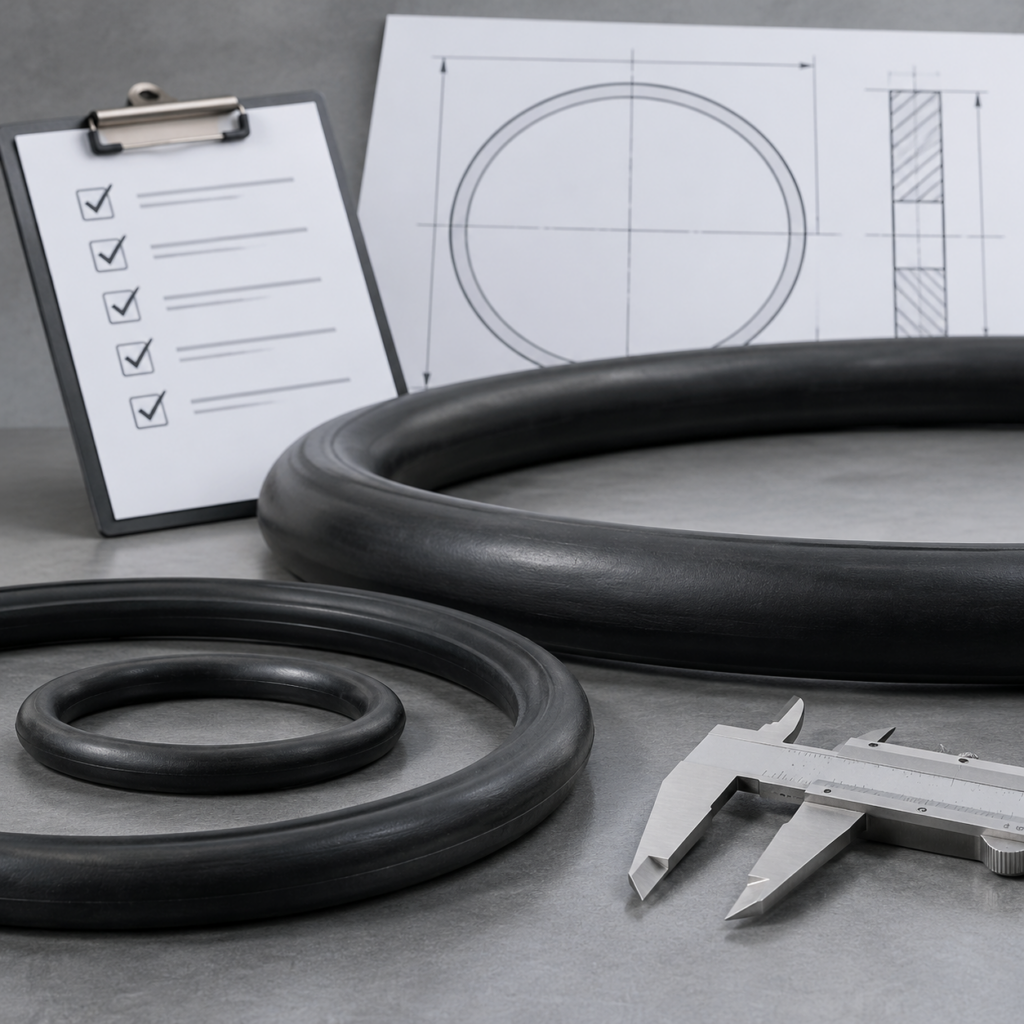
For large-diameter sealing rings, a circumference alone is not enough for a reliable quotation. Buyers should define the controlling perimeter, cross-section, measurement state, joint policy, installation access, operating exposure and acceptance method before tooling. This checklist helps procurement and engineering teams prepare an inquiry without assuming seamless construction, pressure capability or material approval.
Read guide ↗04 / Knowledge
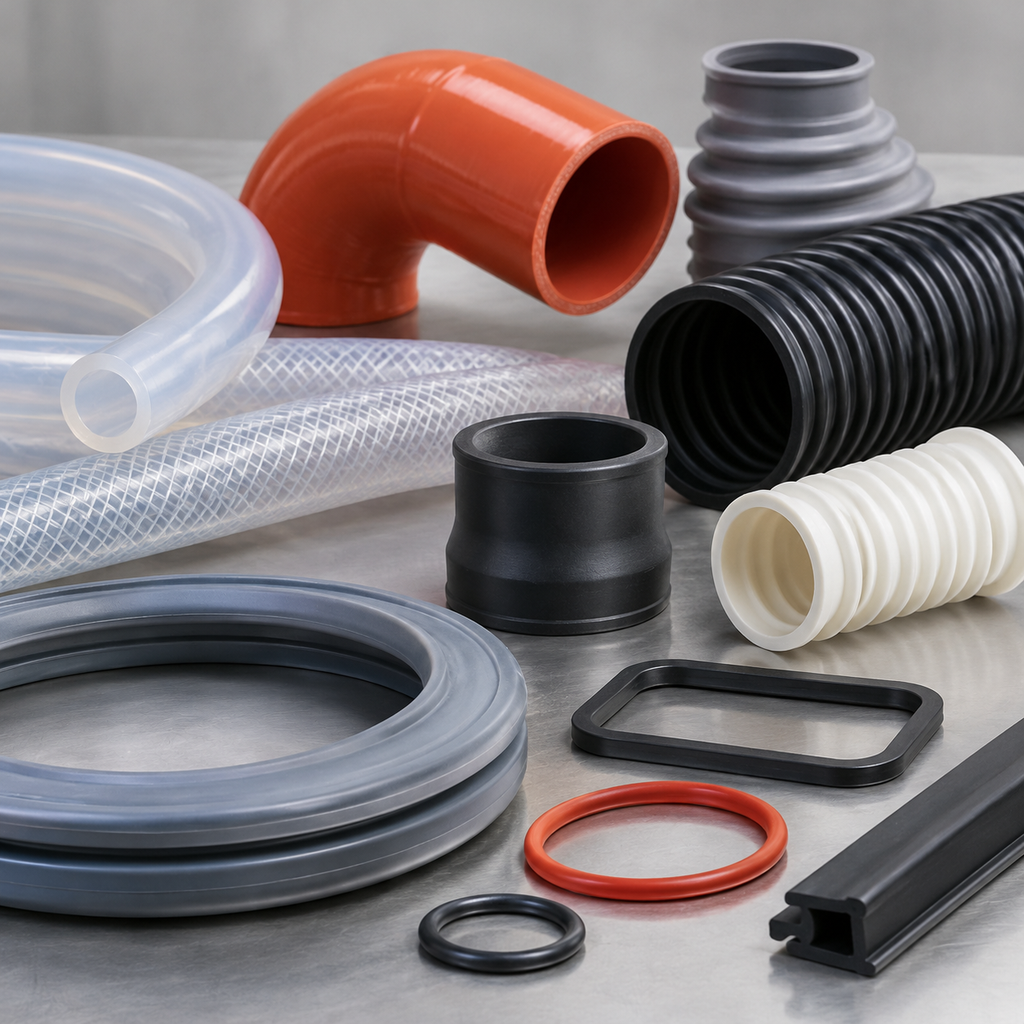
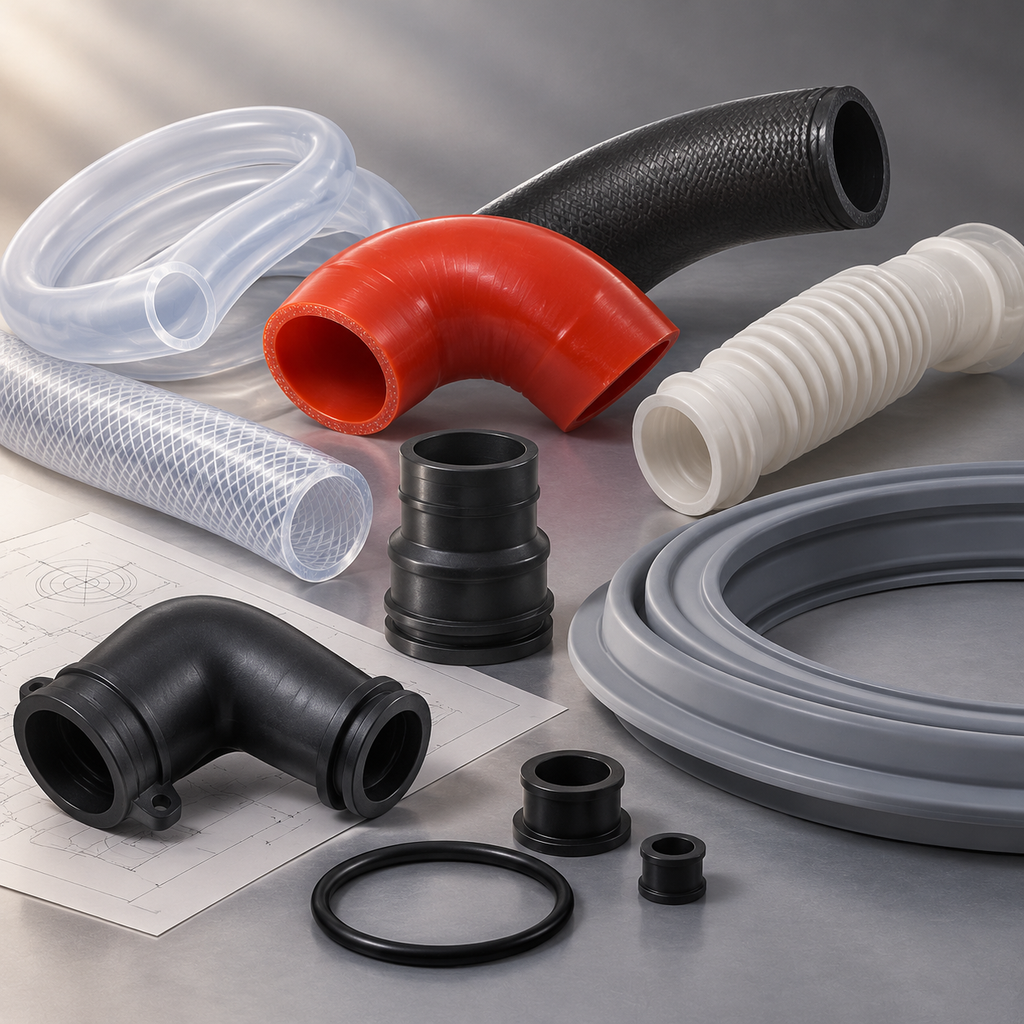
A practical procurement guide to the installation details that drawings and material names often miss. Learn what to specify for pump tubing, formed elbows, reinforced hoses, appliance connectors, automotive ducts, closures, flexible seals and gaskets—and where product-family descriptions stop short of proving suitability.
Read guide ↗05 / Knowledge
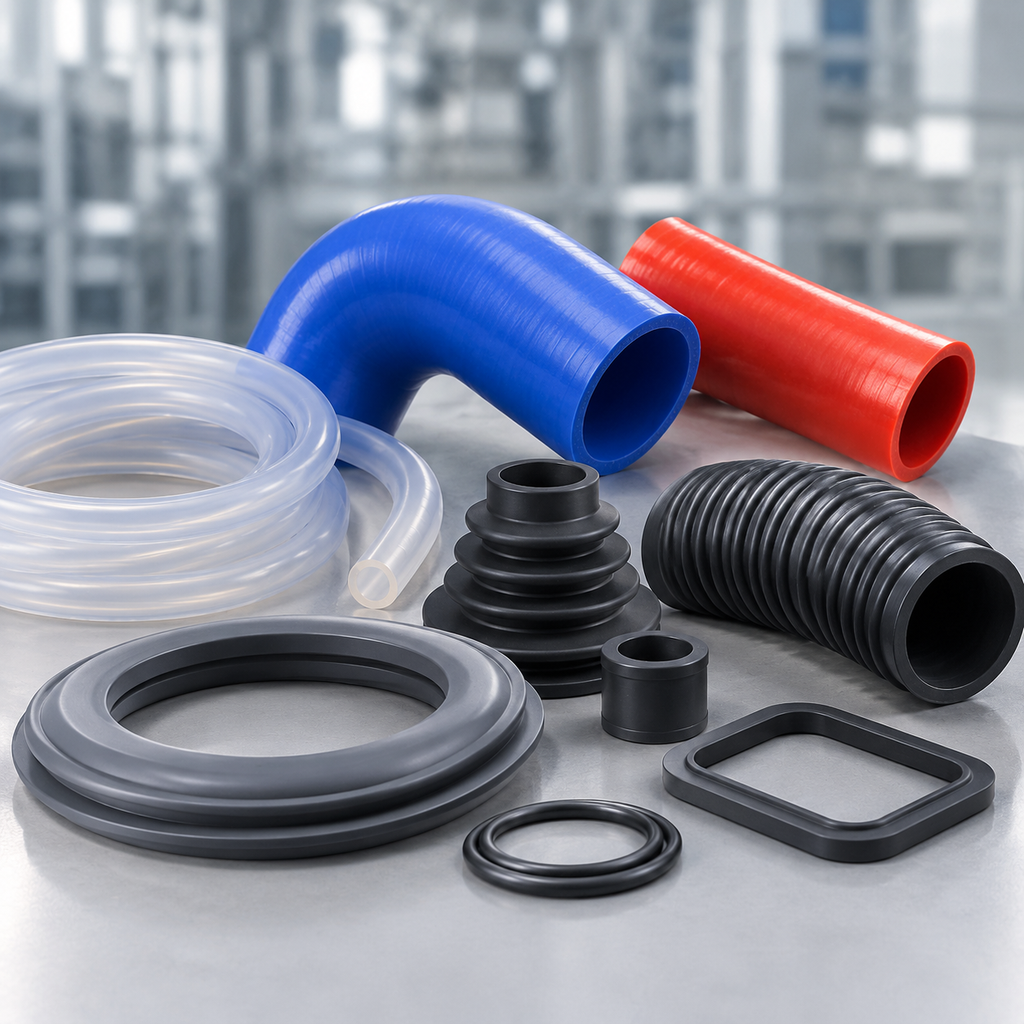
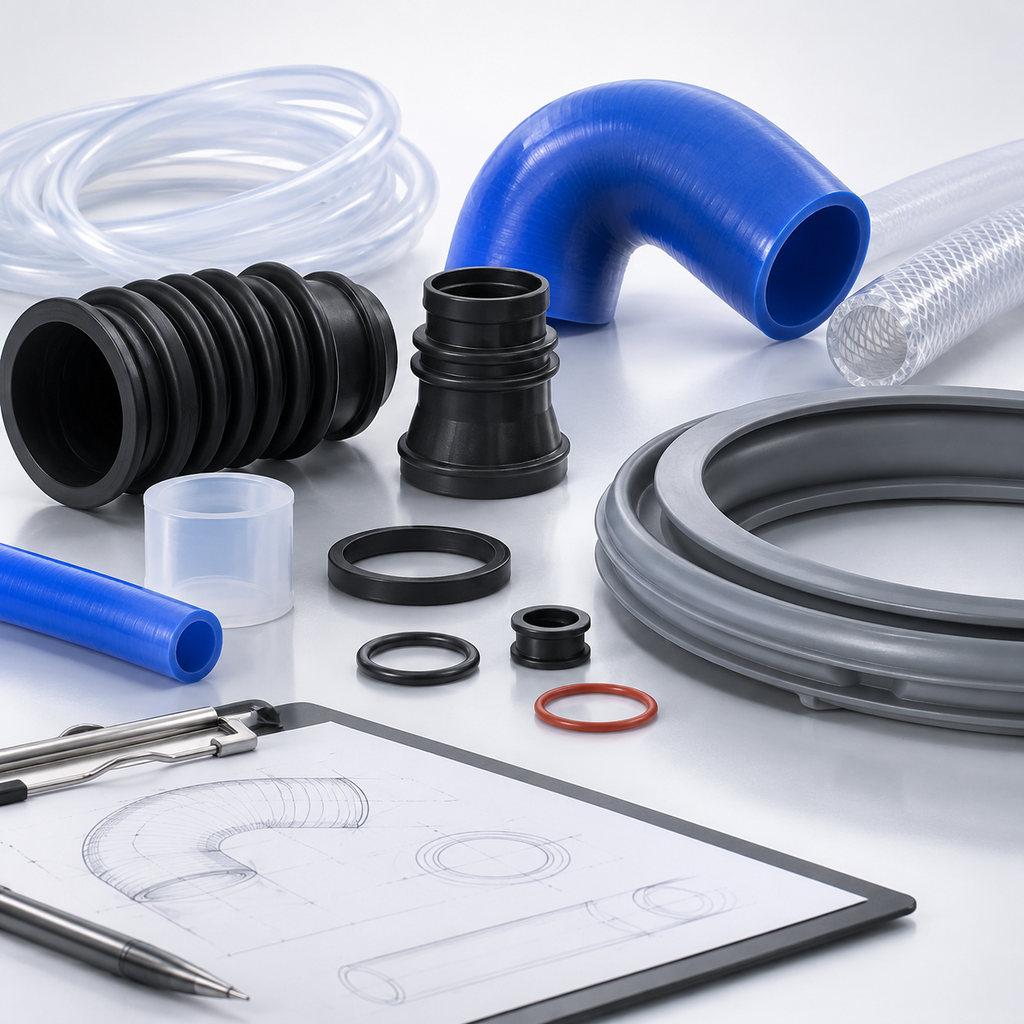
A practical purchasing guide for defining custom silicone tubing, formed hoses, appliance rubber parts, automotive hoses and seals. Learn which dimensions, operating conditions, interfaces, evidence and acceptance criteria to provide—and where visual similarity or a material name cannot establish suitability.
Read guide ↗06 / Knowledge
A practical B2B selection guide for separating pump tubing, transfer tubing, formed elbows, reinforced hoses, appliance connections, automotive ducts and molded seals. Learn which application conditions to define, what drawings and evidence to request, and why similar-looking rubber parts should not be treated as interchangeable.
Read guide ↗07 / Knowledge
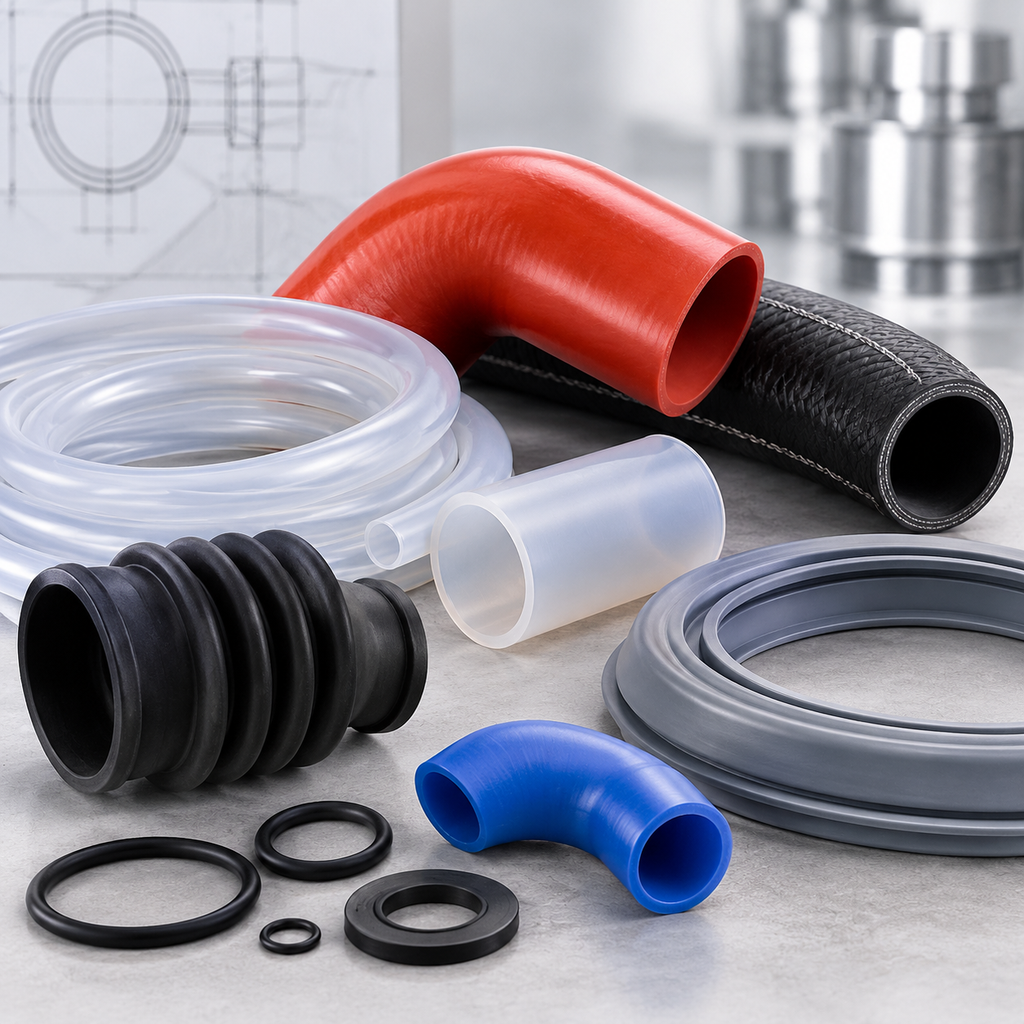
A practical framework for specifying material compatibility across silicone pump tubing, formed elbows, reinforced hoses, appliance parts, automotive hoses and molded seals. Learn how to define media, cleaning, temperature, pressure, movement, geometry and evidence without treating a material name or certificate as proof of finished-part suitability.
Read guide ↗08 / Knowledge
A practical guide to avoiding a common custom-rubber purchasing mistake: selecting by appearance, material name or one dimension. Learn how to define function, interfaces, exposure, installed conditions, evidence scope and acceptance criteria across silicone tubing, formed hoses, appliance parts, automotive hoses, molded seals and gaskets.
Read guide ↗09 / Knowledge
A practical guide to evaluating custom silicone tubing, formed hoses, appliance rubber parts, automotive hoses and molded seals. Learn how to define application conditions, design useful prototype trials, separate documentation from functional evidence and set purchasing boundaries before production release.
Read guide ↗10 / Knowledge
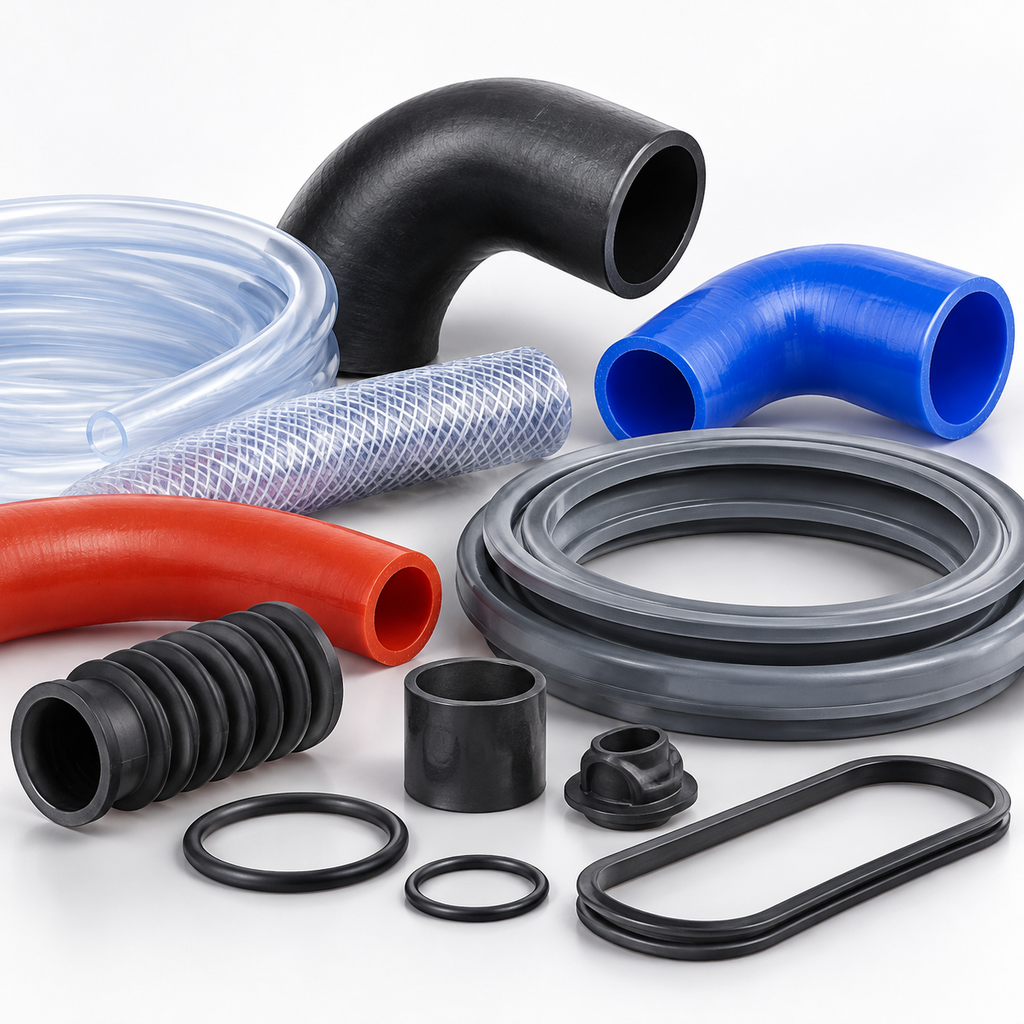
A practical checklist for choosing among pump tubing, formed elbows, reinforced hoses, appliance connectors, automotive ducts and molded seals. Learn which dimensions, media, operating cycles, interfaces, evidence and acceptance criteria suppliers need—and what product family names, materials or appearance cannot prove.
Read guide ↗11 / Knowledge
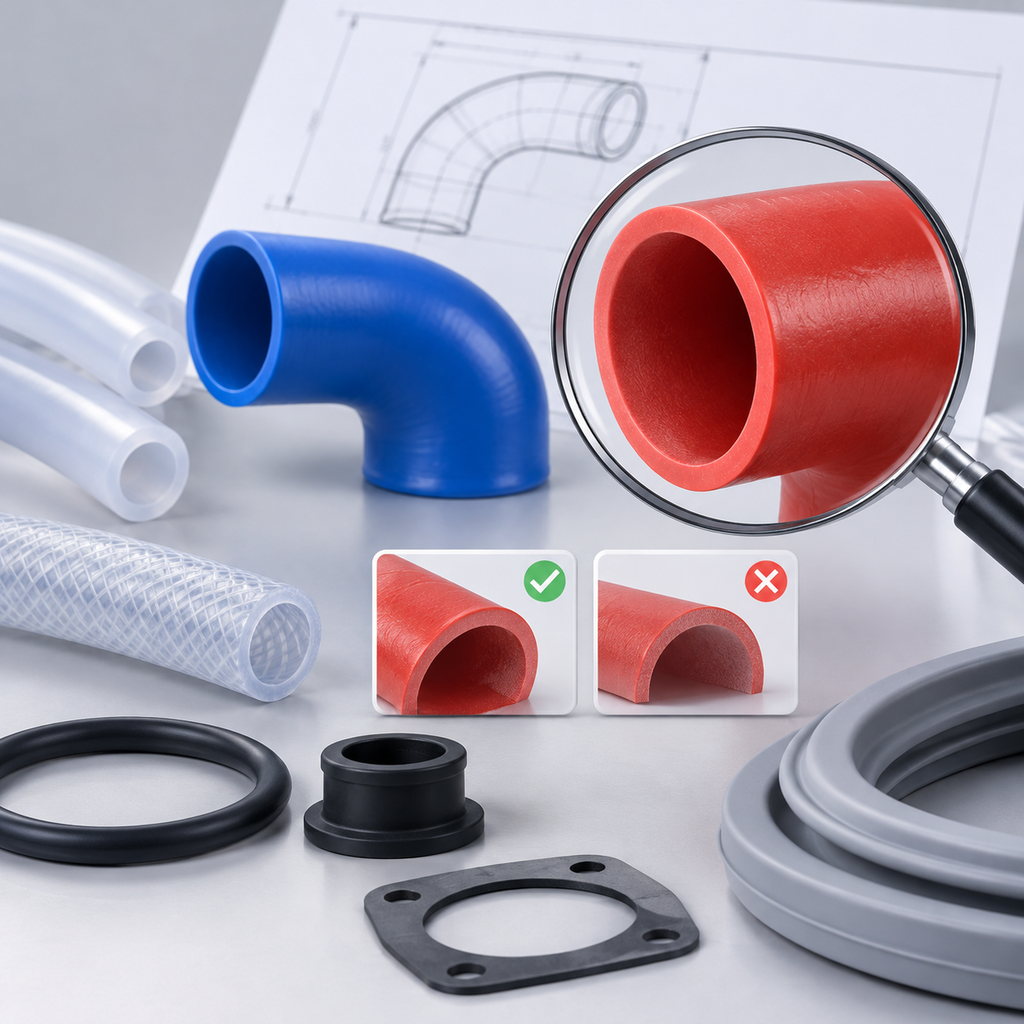
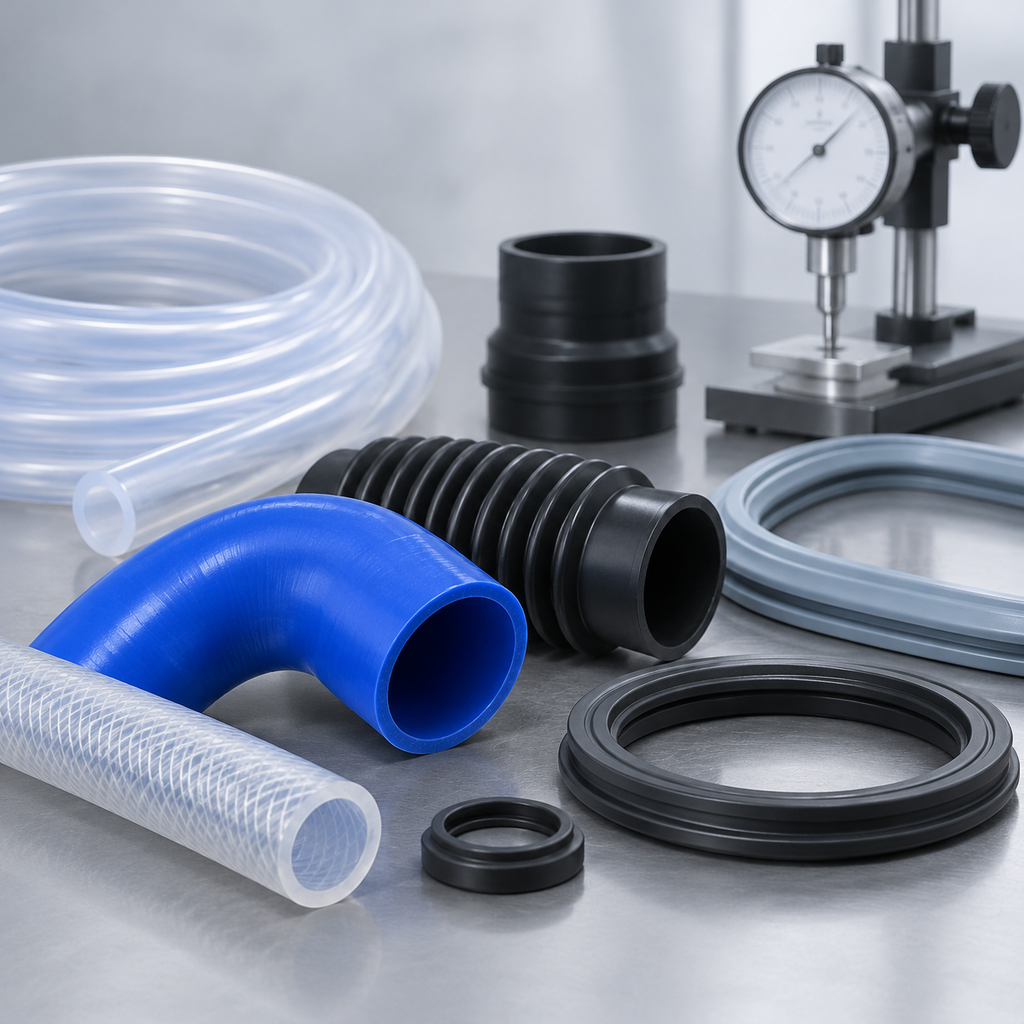
A practical buyer’s guide to defining inspection evidence for silicone tubing, formed hoses, appliance parts, automotive hoses and custom seals. Learn how to separate dimensional inspection, document scope and application validation—and why a material document or passing fit check cannot establish unsupported service life, pressure capability or regulatory suitability.
Read guide ↗12 / Knowledge
A practical framework for selecting and replacing custom silicone tubing, formed hoses, appliance parts, automotive hoses and molded seals. Learn how to define operating conditions, record installed geometry, separate documentation from performance evidence and establish project-specific inspection and replacement criteria.
Read guide ↗