Describe the complete motion
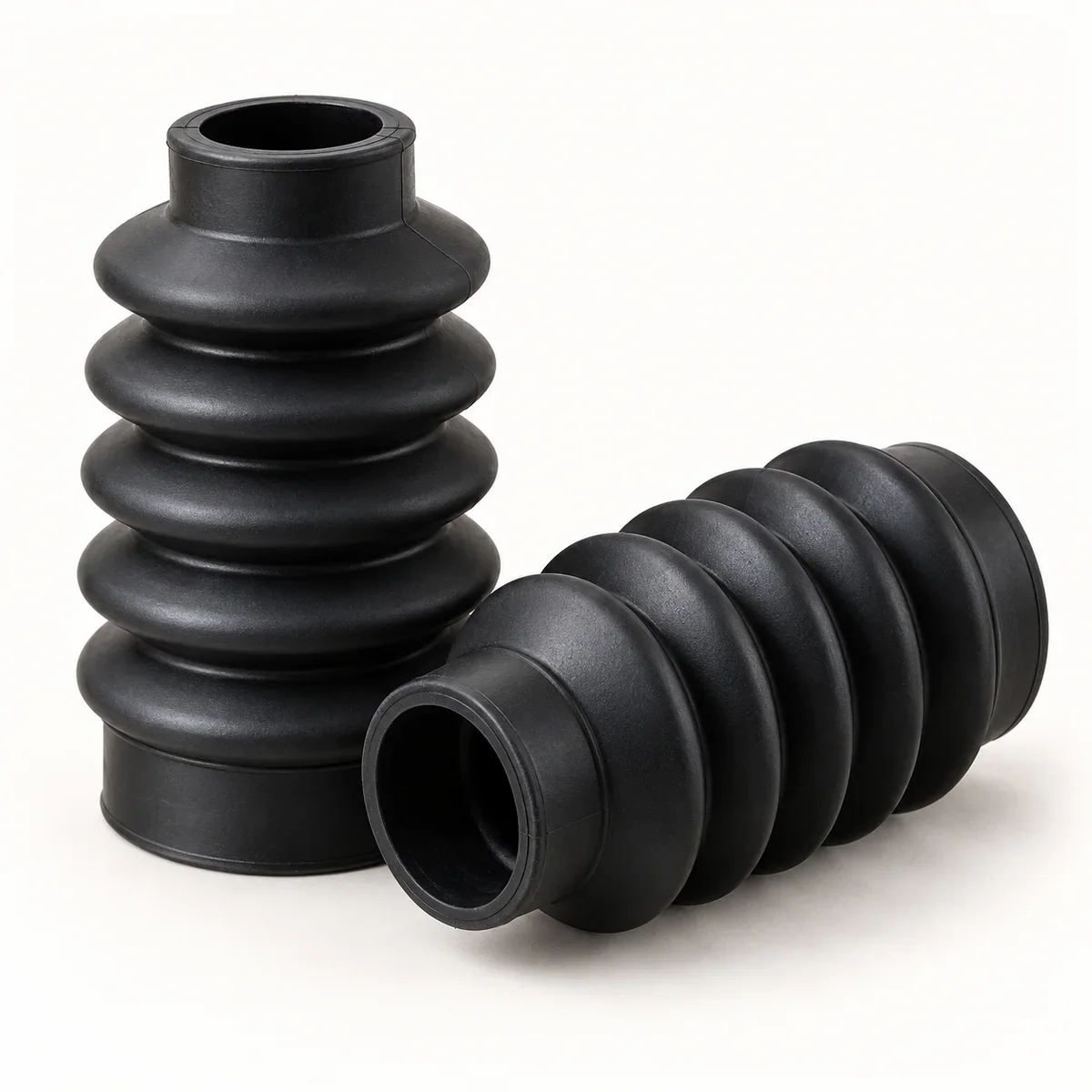
A boot may look correct in one position and interfere at the end of travel. Supply the minimum, nominal and maximum installed lengths plus lateral or angular movement. The inquiry should show nearby surfaces that the folds must avoid.
- Identify whether the task is dust/splash protection or fluid containment.
- Show both attachment ends.
- Mark any venting requirement rather than leaving pressure buildup unspecified.
Review the folds and attachment
Specify the allowed package diameter, fold envelope and clamp or groove details. If the boot surrounds a rotating or sliding part, identify whether it is intended to touch that part. Record external oils, ozone, cleaning agents and debris that may reach the cover.
Define validation without claiming life
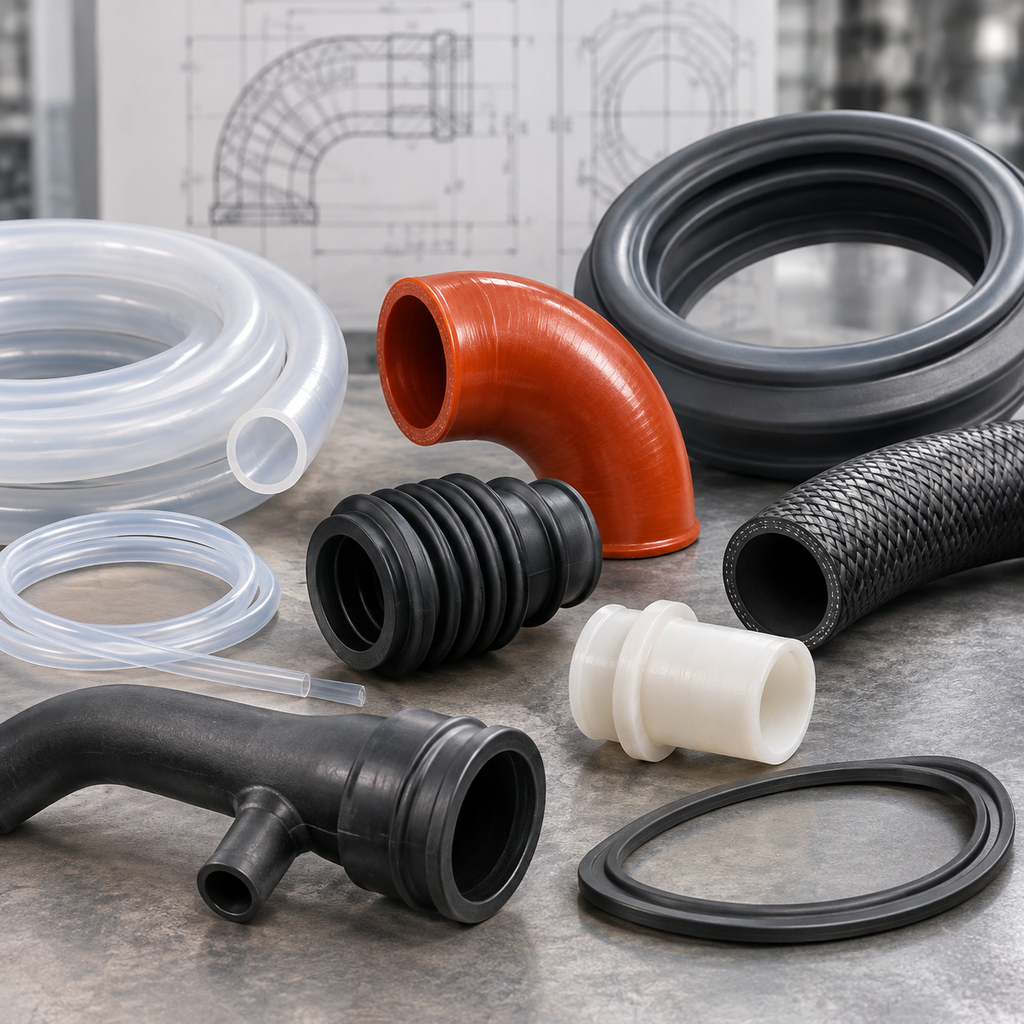
Agree flex, attachment and protective-function tests for the real motion. A generated illustration does not establish fatigue life, constant-velocity-joint compatibility or pressure capability.
Prepare your inquiry
- Motion envelope or assembly animation/drawing.
- End connections and any vent arrangement.
- Required service cycle and environment.
- Prototype test plan and quantity.
Buyer questions
Is a dust boot pressure-tight?
Do not assume it. Fluid containment or differential-pressure requirements must be stated and validated separately.
Can I specify only the extended length?
Include the compressed and nominal lengths, offsets and clearances so the complete motion can be reviewed.
Related project families
Engineering reading