Rizhao Xinwei Machinery Parts Co., Ltd.
Custom molded seals

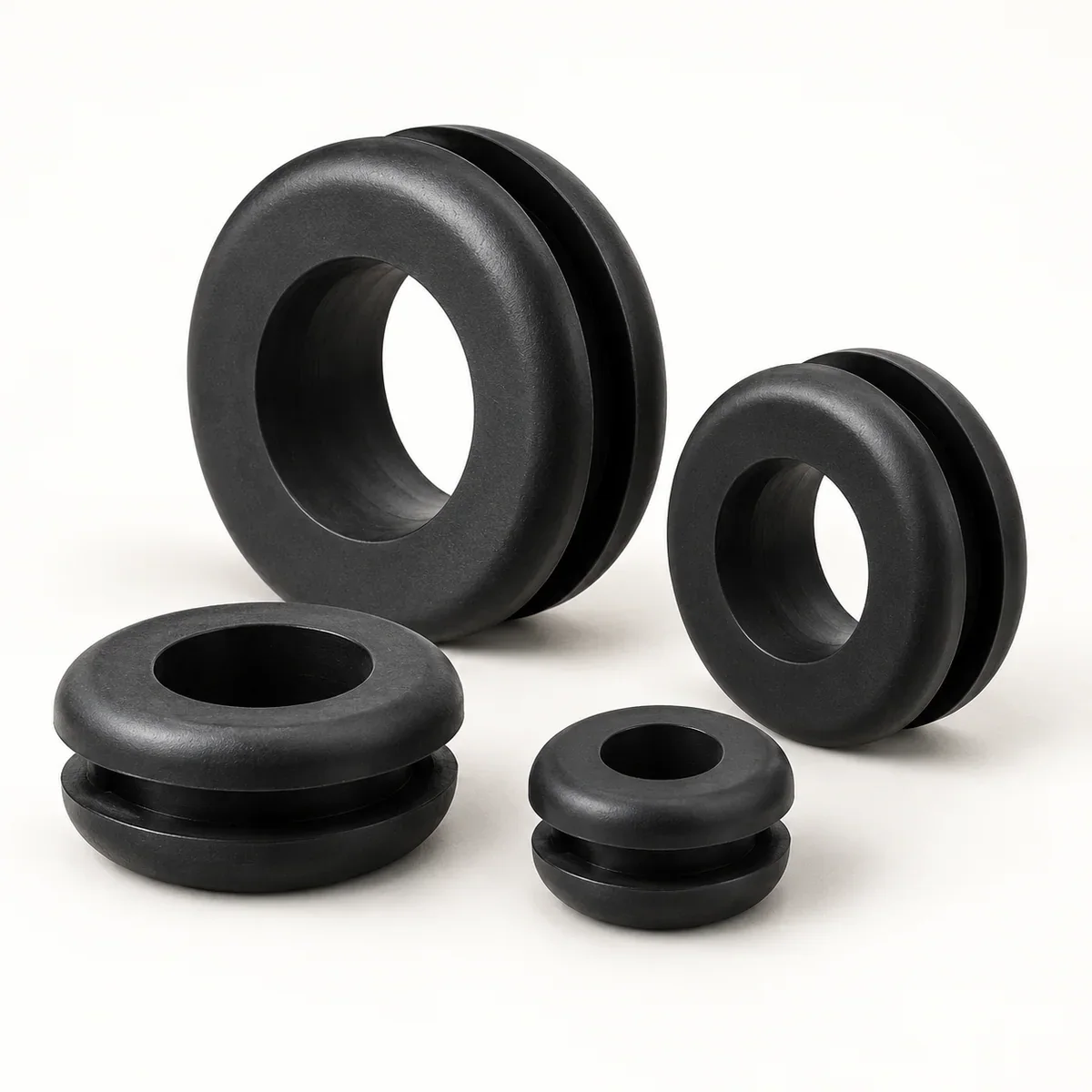
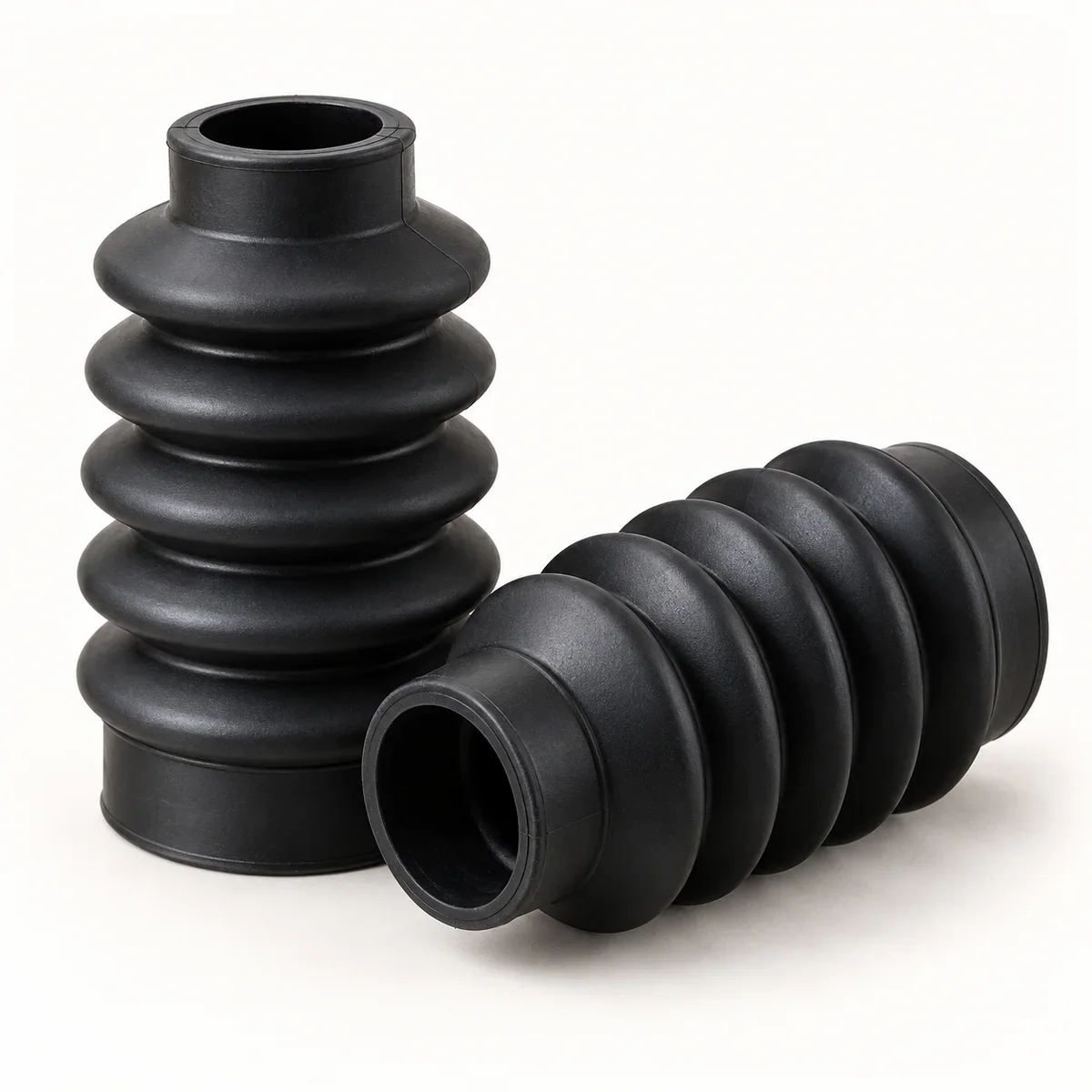
Rubber Grommets

Molded pass-through parts for cables, tubes and panel openings, with panel fit, bore contact and insertion requirements defined.

Custom component seriesDrawing / sample review
Panel interface
Hole contour and panel thickness in mm, including tolerance
Pass-through
Cable/tube OD range, count and spacing in mm
Retention
Groove width/depth, flange geometry and pull-out requirement
Assembly
Insertion direction, allowable force and permitted aids
Read engineering & procurement details ↓

Control two interfaces

A grommet fits both the panel opening and the cable or tube passing through it. Identify the panel thickness and hole profile alongside the pass-through diameter. An overall outside diameter cannot describe retention or cable contact.

  • Show the groove that locates on the panel.
  • Identify split, closed or multi-hole configuration.
  • Mark the insertion direction and tool access.

Protection and sealing are separate requirements

State whether the part is intended for edge protection, routing support or a tested environmental seal. A soft pass-through does not by itself establish strain relief, electrical insulation or an ingress protection level. Include the complete assembly acceptance test if these functions are required.

Customization questions

Review cable movement, contact with lubricants or cleaning agents, visible finish and allowable insertion force. Thin webs, multiple holes and complex panel contours should be represented in the drawing before sampling.

Prepare your inquiry

  • Panel and cable/tube drawings.
  • Expected motion and assembly sequence.
  • Required compound or exposure details.
  • Insertion and retention acceptance method.

Buyer questions

Can a grommet replace a cable gland?

Only after the design owner checks the required sealing, retention and electrical functions. Similar appearance does not establish equivalence.

Why is panel thickness required?

It defines the retention groove fit and helps prevent a loose or difficult-to-install part.

Related project families

Engineering reading

SPECIFICATION REFERENCE

Define the part for its working conditions.

These are project discussion inputs. Compound, tolerances and validated performance require agreement for the specific part.

Specification reference

Selection / definitionReference and project conditions
Panel interfaceHole contour and panel thickness in mm, including tolerance
Pass-throughCable/tube OD range, count and spacing in mm
RetentionGroove width/depth, flange geometry and pull-out requirement
AssemblyInsertion direction, allowable force and permitted aids
ExposureIndoor/outdoor conditions, fluids and temperature in °C
Functional testProtection, movement, sealing or retention criteria for the assembly

KNOWLEDGE & SELECTION

Engineering reading

Knowledge center

CONTINUE THE COMPARISON

Related product series.

YOUR NEXT COMPONENT

Start with the application.
Define the part together.

Share your drawing or sample, working conditions, quantity and acceptance requirements with our team.

WhatsApp