Describe the discharge route
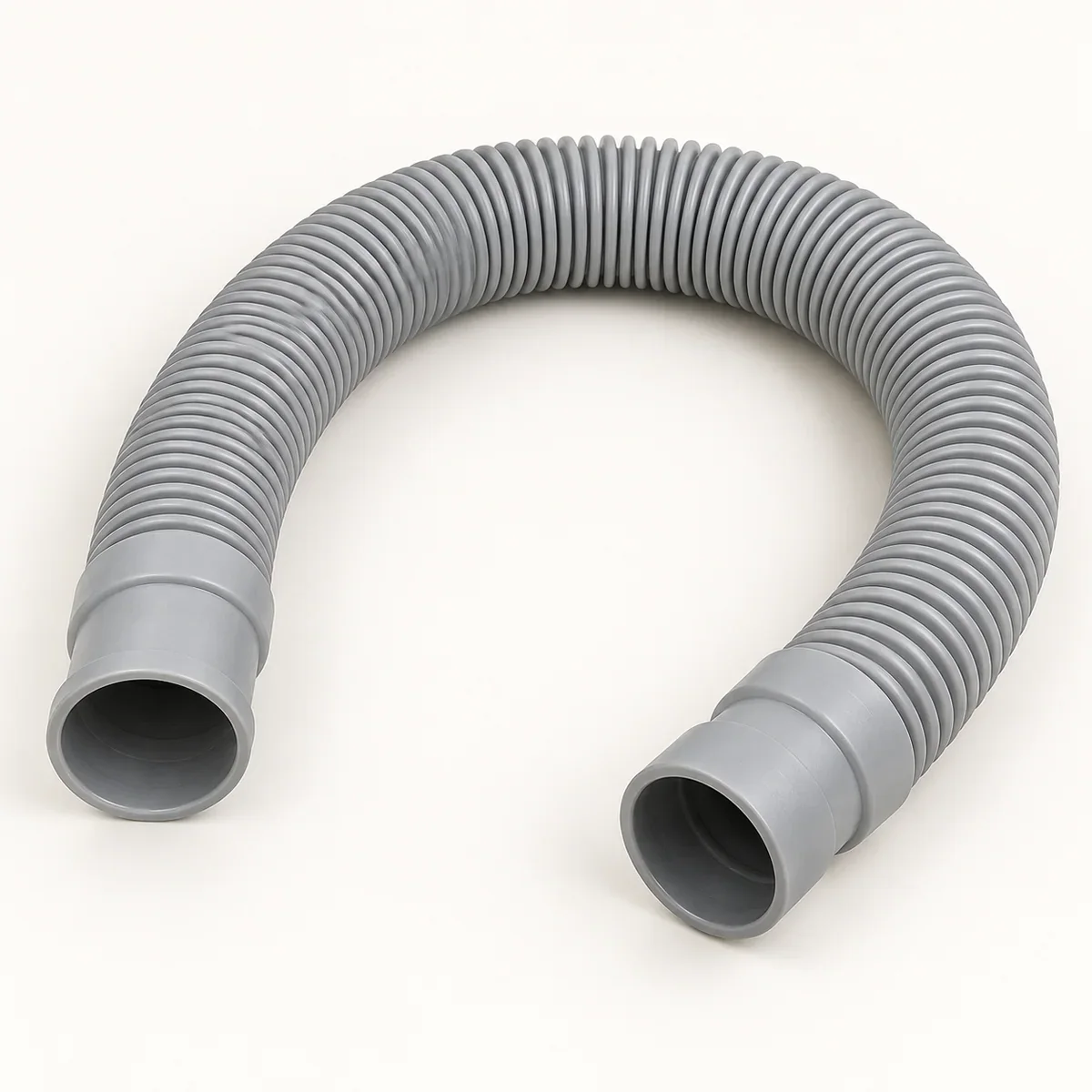
A drain hose inquiry should show how water leaves the appliance, which fitting it connects to and where it is supported. Include the installed route, length and any corrugated or flexible section. State whether the hose is internal or external to the appliance.
- Identify both end geometries.
- Show height changes and attachment points.
- Mark areas exposed to abrasion or repeated movement.
Identify what passes through it
Record water temperature, detergents, suspended debris and cleaning chemicals. Provide pump discharge conditions or gravity-drain requirements and any test pressure. Drain service must not be assumed equivalent to pressurized inlet, drinking-water or food-contact service.
Inspect the assembly task
Define end retention, leakage, routing and drainage acceptance. If corrugations are proposed, evaluate the actual package and cleaning requirements; shape alone does not prove kink resistance or service life.
Prepare your inquiry
- End drawings and route with support points.
- Discharge fluid and cleaning conditions.
- Required movement and installation constraints.
- Sample drainage/leak/retention criteria.
Buyer questions
Can this be used for an appliance inlet?
A pressurized inlet is a different duty. Provide its separate construction and validation requirements.
Does a corrugated surface guarantee no kinking?
No. Assess the installed bend, support, movement and duty for the actual design.
Related project families
Engineering reading