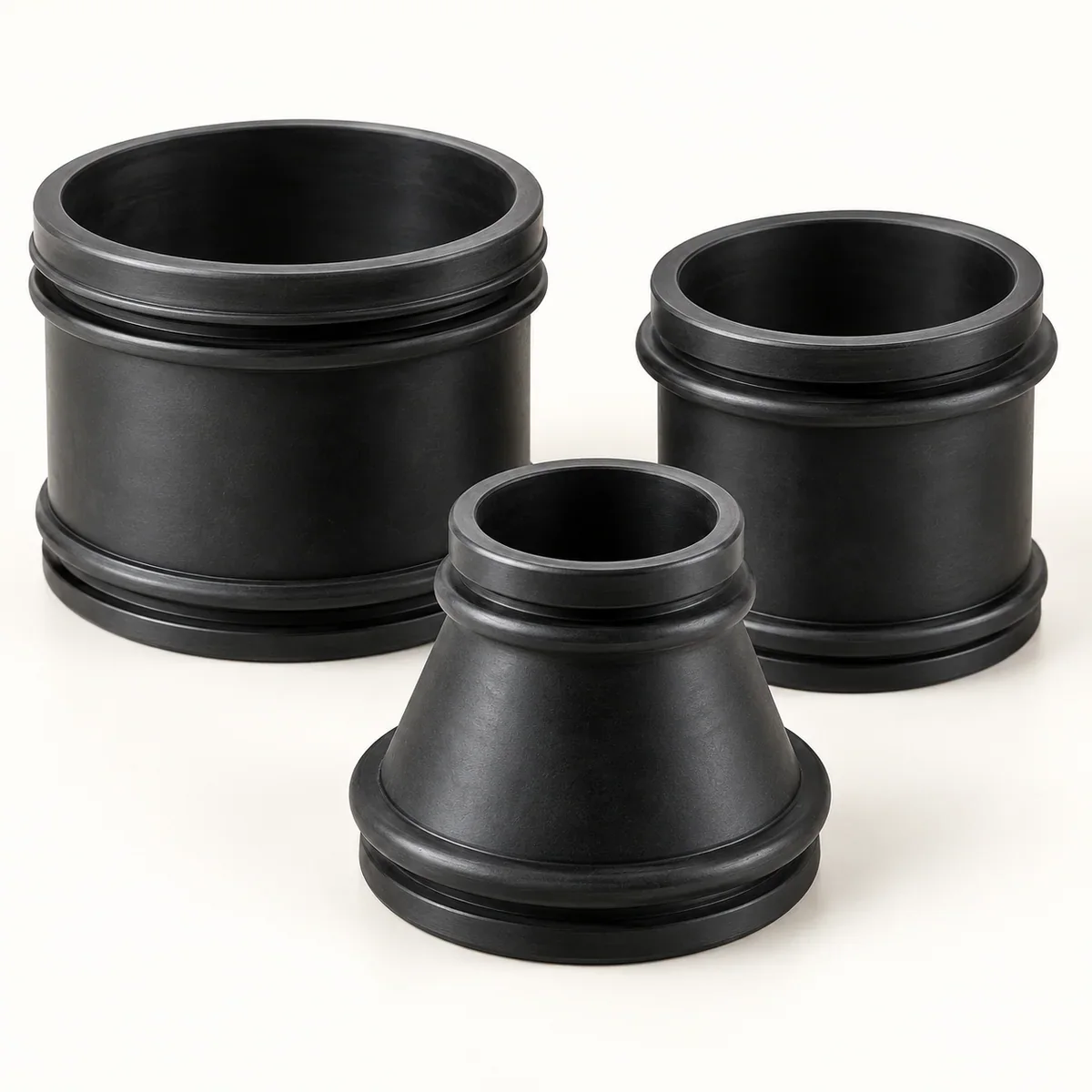
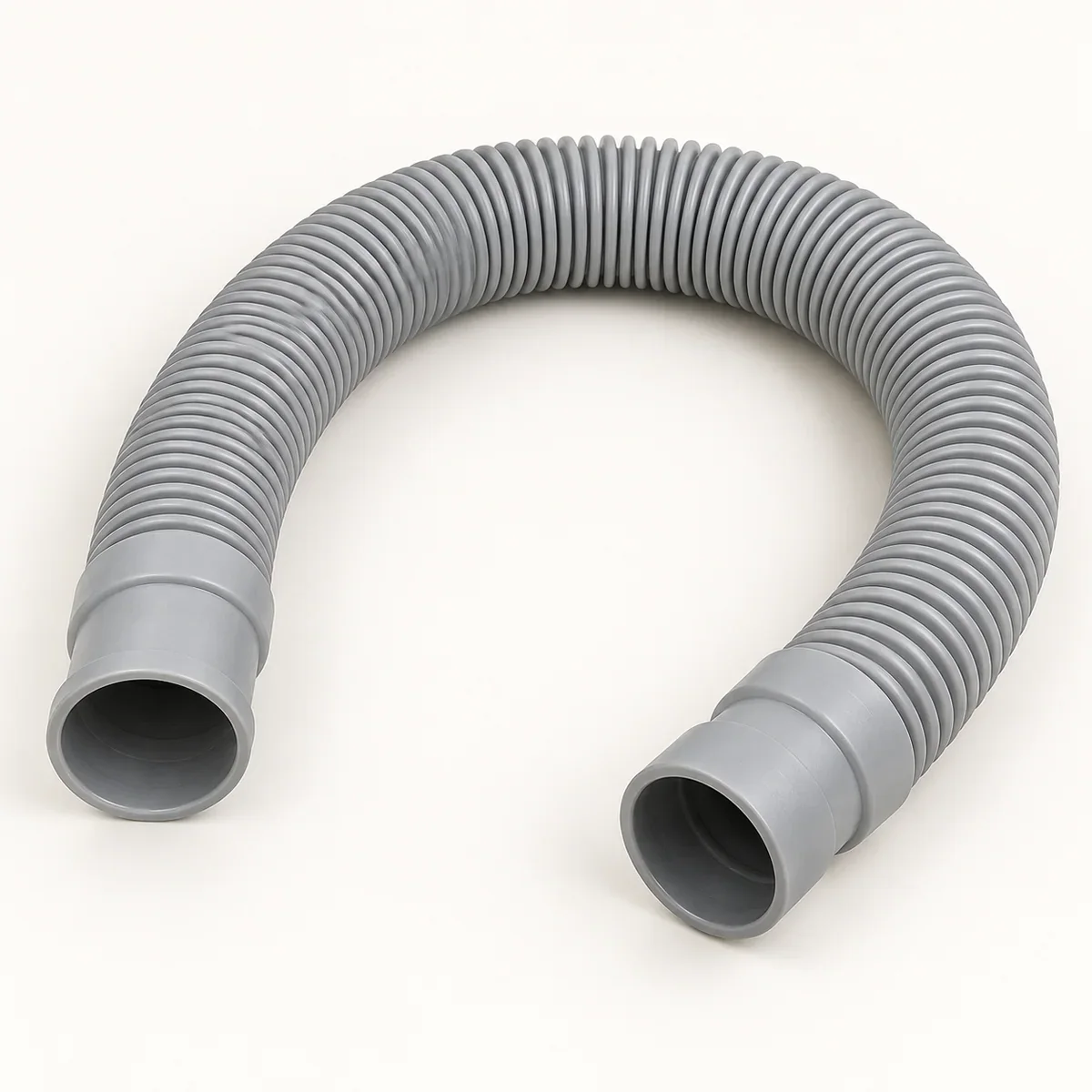
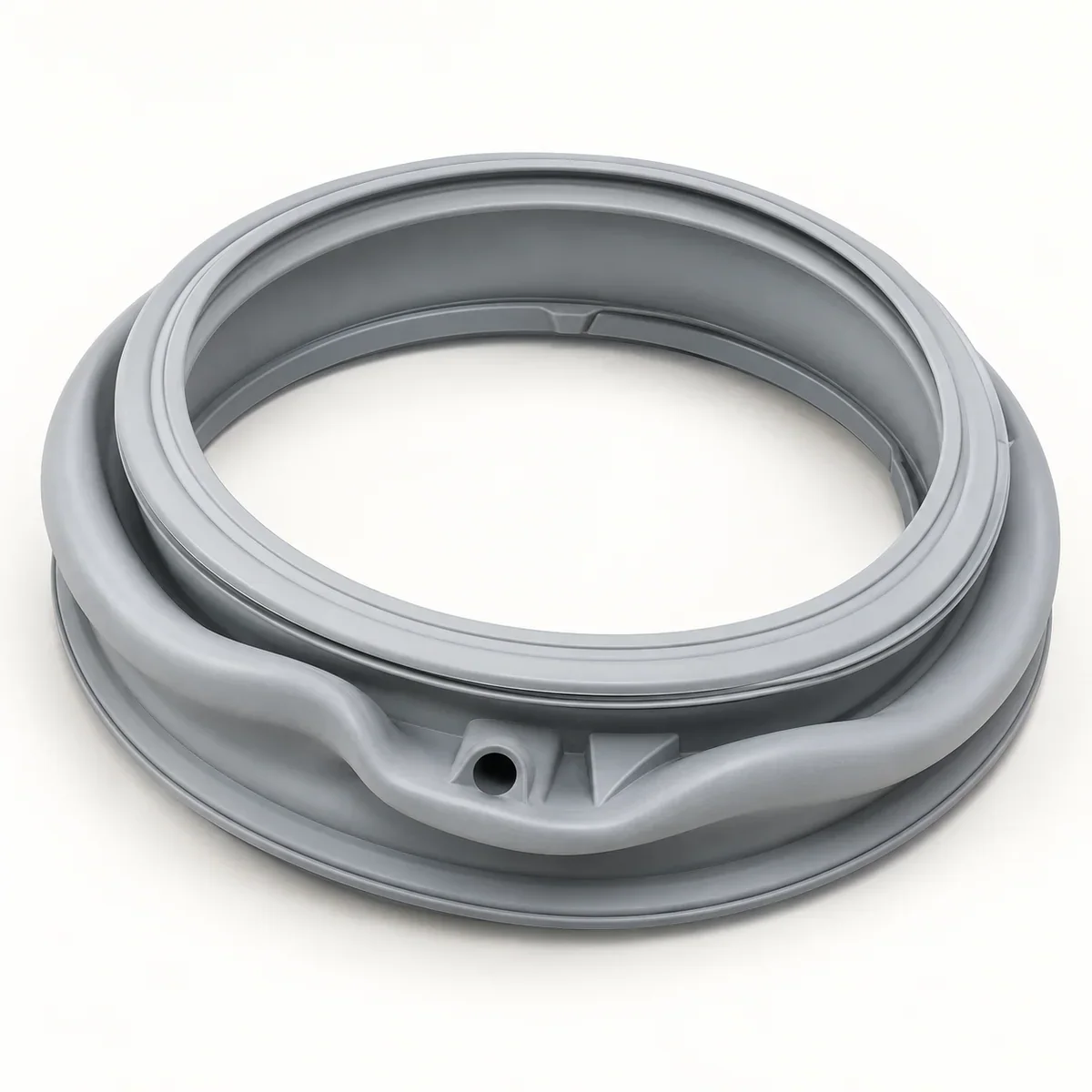
Connect two defined components
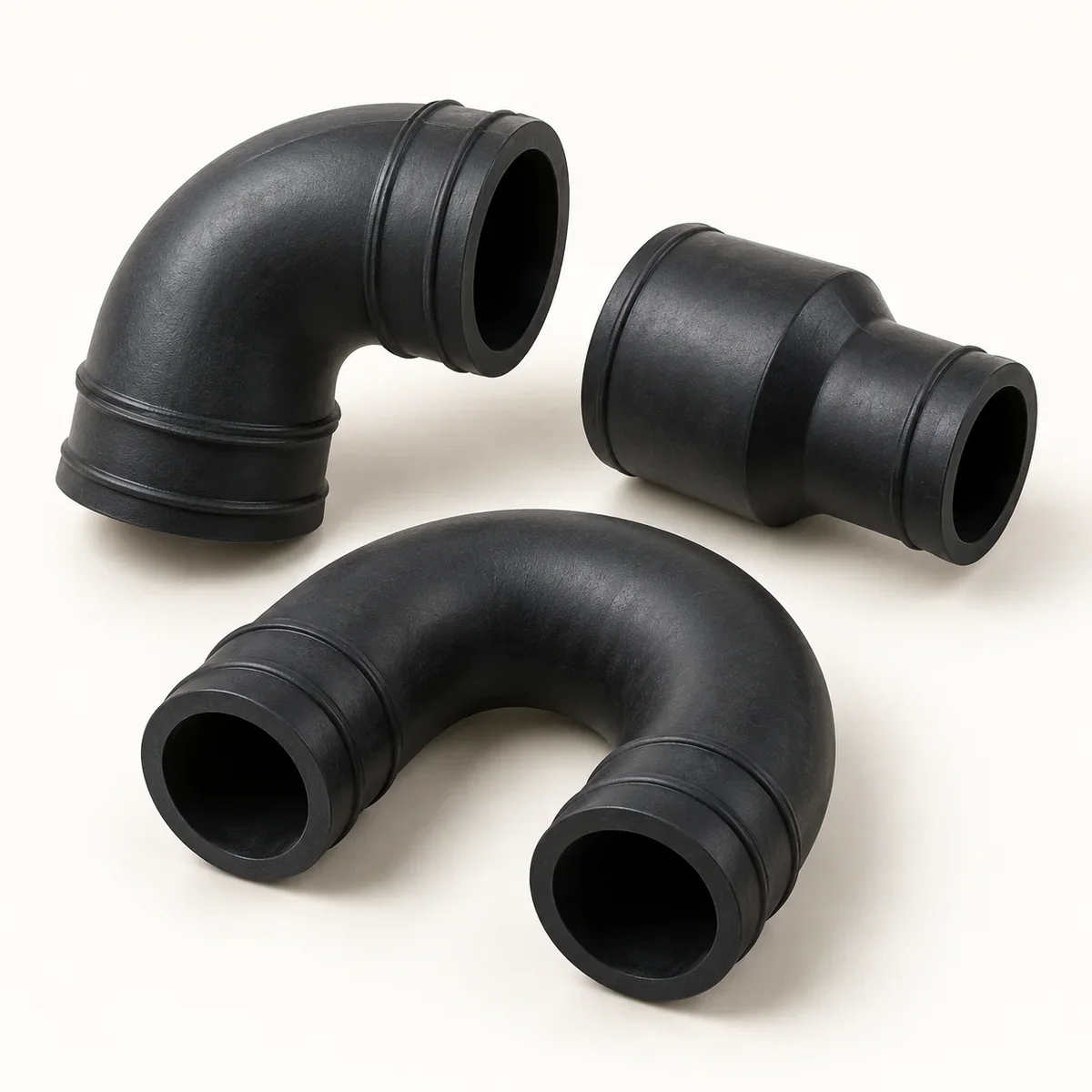
Short hoses often need different end diameters, an offset or a branch to fit a compact assembly. Label every connection and show the installed orientation relative to the mating components.
- Distinguish smooth sealing/clamping areas from flexible sections.
- Locate branches and any molded fixing features.
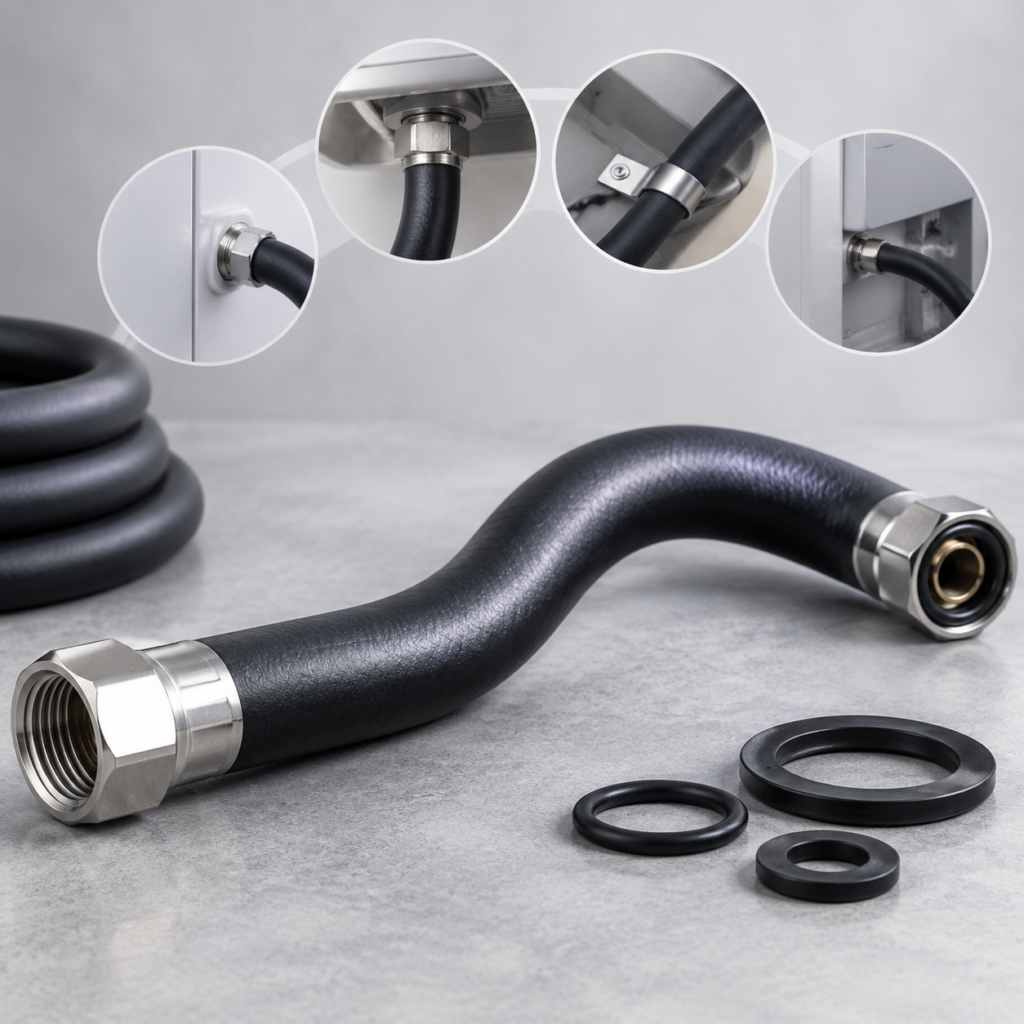
- Provide the space available for clamp installation.
Account for component movement
Explain whether the connected pump, tub or dispenser moves relative to the cabinet. Provide the water and detergent cycle, pressure conditions and required movement. A short straight dimension in free state is not enough to define installed fit.
Separate service and evidence
Supply the appliance-specific fit, leakage and aging requirements for review. No potable-water approval, universal detergent resistance or named-model compatibility is implied by the connector shape.
Prepare your inquiry
- Mating-component and connector drawings.
- Installed position with clamp access.
- Operating and cleaning cycle.
- Required material documents and validation criteria.
Buyer questions
Why label the ends A and B?
Different ends may have different diameters, fitting beads or clamp zones. Consistent labels prevent a reversed or incomplete specification.
Can a sample define the installed offset?
A sample helps, but include the installed component positions and tolerances that control the actual fit.
Related project families
Engineering reading